
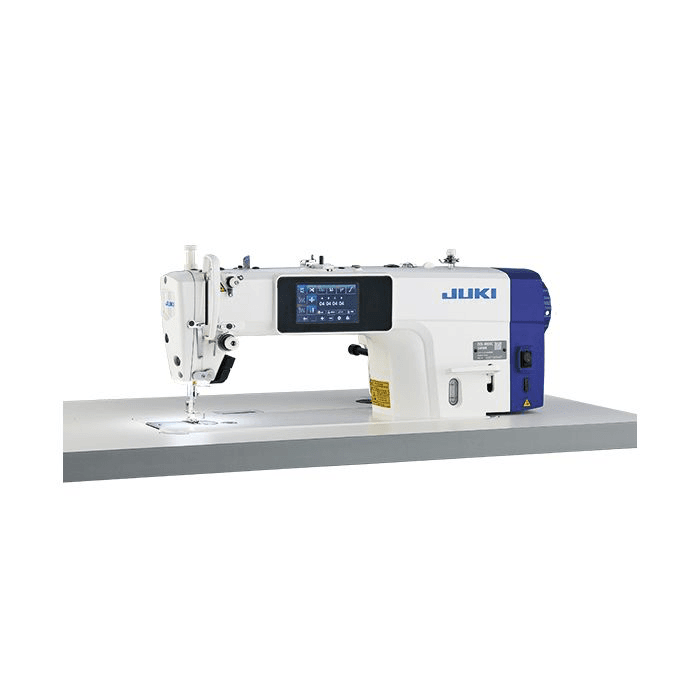

The JUKI DDL-8000C-SMN-BK is a single-needle, bottom feed lockstitch flatbed industrial sewing machine from JUKI’s DDL-8000 series. It is the basic machine for garment making: straight seams at high speed on light and medium fabrics. This version has an automatic thread trimmer, which saves time on every seam and makes a difference in workshops with volume.
Delivery time: 2 to 3 weeks
Technical specifications
| Feature | Specification |
|---|---|
| Machine type | Flatbed |
| Stitch type | Lockstitch (301) |
| Needles | 1 |
| Feed | Drop feed |
| Materials | Thin and medium |
| Maximum speed | 5,000 s.p.m. (version for medium materials, according to the JUKI catalogue) |
| Needle | DB×1 (no. 14 as standard) |
| Automatic thread trimmer | Yes |
| Stitch length | Ask about configuration |
| Motor | Ask about configuration |
Materials and products
- Clothing: shirts, blouses, trousers.
- Workwear and general garment making in medium fabric.
- Sportswear in woven fabrics.
Which workshop it is for
The basic machine in any garment workshop: one needle, straight stitch, bottom feed and high speed. It does the bulk of the seams in clothing, workwear and general garment making on light and medium material, and it is where automatic functions make the most difference, because every second saved is multiplied by thousands of seams a day.
Alternatives in the catalogue
If you are comparing, this is the other machine in the same family: Dürkopp Adler 261-140342-01. They share the same approach and differ in equipment, number of needles or duty cycle, so it is best to decide by the specific operation you will repeat every day. The full catalogue is in industrial sewing machines.
When should you choose this machine?
- Compared with other lockstitch flatbeds (Dürkopp Adler 261): same operation; equipment and price differ.
- Bottom feed versus compound feed (DA 867): if you sew several layers, foam, canvas or thick leather, the top layers lag behind with bottom feed; that is where you need compound feed.
Applications
Clothing manufacture · Shirts and blouses · Workwear and denim · Lockstitch machines · Flatbed machines
Spare parts and technical service
More spare parts in original spare parts. If you have questions about this machine or which one suits your product, write to us via contact.
Frequently asked questions
Which needle does it use?
System DB×1. It comes with a no. 14 as standard; the size is matched to the fabric and the thread.
Is it suitable for leather?
For thin leather in a few layers, yes. For thick leather or several layers you need compound feed: bottom feed only moves the bottom layer and the top ones lag behind.
What do I gain from the automatic thread trimmer?
Seconds per seam, which add up to quite a lot over a working day. And above all consistency: the backtack comes out the same whoever does it.
What maintenance does it need?
Lubrication as the manual says, a new needle before it gets blunt and regular checks of the needle-hook relationship. Most stitch faults are avoided there.
Price, availability and purchase: see this product in the Maquinorya shop. Technical questions before you buy? Send us your case.
Full series and other versions: JUKI DDL-8000C series
{“@context”:”https://schema.org”,”@graph”:[{“@type”:”FAQPage”,”mainEntity”:[{“@type”:”Question”,”name”:”Which needle does it use?”,”acceptedAnswer”:{“@type”:”Answer”,”text”:”System DB×1. It comes with a no. 14 as standard; the size is matched to the fabric and the thread.”}},{“@type”:”Question”,”name”:”Is it suitable for leather?”,”acceptedAnswer”:{“@type”:”Answer”,”text”:”For thin leather in a few layers, yes. For thick leather or several layers you need compound feed: bottom feed only moves the bottom layer and the top ones lag behind.”}},{“@type”:”Question”,”name”:”What do I gain from the automatic thread trimmer?”,”acceptedAnswer”:{“@type”:”Answer”,”text”:”Seconds per seam, which add up to quite a lot over a working day. And above all consistency: the backtack comes out the same whoever does it.”}},{“@type”:”Question”,”name”:”What maintenance does it need?”,”acceptedAnswer”:{“@type”:”Answer”,”text”:”Lubrication as the manual says, a new needle before it gets blunt and regular checks of the needle-hook relationship. Most stitch faults are avoided there.”}}]}]}
Reviews
There are no reviews yet.