
Machinery for furniture upholstery: sofas, armchairs and seating
Sofas, armchairs, headboards and contract seating. Long seams over foam, visible topstitching and heavy pieces: three conditions that rule out a conventional flatbed before you start.
In furniture upholstery the problem isn’t the stitch, it’s the feed. The cover has foam behind it, the seam is a metre and a half long and the topstitching stays on view in the customer’s living room for years. If the two layers don’t move forward equally, the piece comes out of square and there is no way to hide it.
What is made here
Sofas and armchairs
Seat, backrest and arm covers, with visible stitching and often buttoned (capitonné). Large pieces that you need to handle with the machine, not against it.
Headboards and furniture
Upholstered panels, buttoned headboards and custom furniture. A lot of decorative topstitching on flat, padded surfaces.
Seating and contract
Hospitality, office and project work. Repeated runs, tight tolerances and the requirement that piece number two hundred is the same as the first.
Materials: upholstery fabric, chenille and velvet, faux leather and leather, with foam and wadding behind. Each one needs its own needle and presser foot setting.
The feed decides
With bottom feed only, the lower layer moves forward and the upper one stays behind. On a short seam you don’t notice; on a sofa valance, by the time you reach the end there are three centimetres of fabric left over. That is why upholstery is done with compound feed: feed dog below, alternating presser foot above and a needle that moves with the feed.
Stitch length and foot lift
The visible seam on a sofa needs a long, even stitch, and getting through foam and reinforcements needs presser foot lift. Together, those two things narrow the catalogue considerably.
When the piece is no longer flat
For bulky pieces, the space to the right of the needle decides whether you handle the cover or fight with it. On tight curves a post bedcomes in, and closing pieces that are already closed is done on a free cylinder arm, which lets you put the assembled cover in and sew from the inside.
See sewing machines and overlock machines.
Joining seams and decorative seams
A sofa cover has two kinds of seam that don’t need the same machine. Mixing them up is what leads people to buy a two-needle machine for work done with one, or to finish by hand a topstitch that should come off the machine.
Joining seam
The one that closes the piece: joins panels, assembles the arm, closes the valance. It is done with one needle and what it needs is feed and foot lift, because there is always foam or wadding behind it.
Decorative seam
Visible topstitching, parallel double stitching and buttoning, with two needles at a fixed distance. It is not just aesthetic: that topstitching holds the seam allowances open, stops the excess from moving under the cover and reinforces the area that works hardest. Decorative and functional at the same time.
For ornamental stitches with free programming, two needles and a touch screen, the Dürkopp Adler – Cometa SPO 868 / 869. You will find it with the others under special machines for upholstery.
| Which operation | Which machine, and models |
|---|---|
| Joining and closing on the flat | 1-needle compound feed flatbed. PFAFF 1245/46 · DA 267 · Typical TW1-1245 · Typical GC20665 · Vetron 4000/4010 · Brother UF-8910 · Juki LU-2810 · PFAFF 2545/46 PLUS |
| Parallel decorative topstitching and buttoning | 2-needle flatbed. Vetron 4020/4030 · Juki LU-2860 · Typical GC20666 |
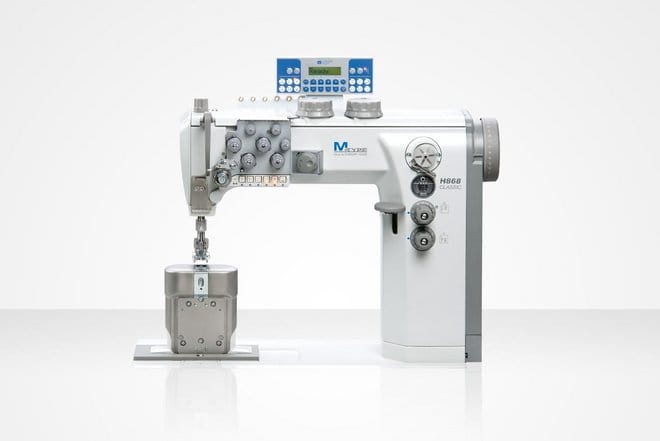
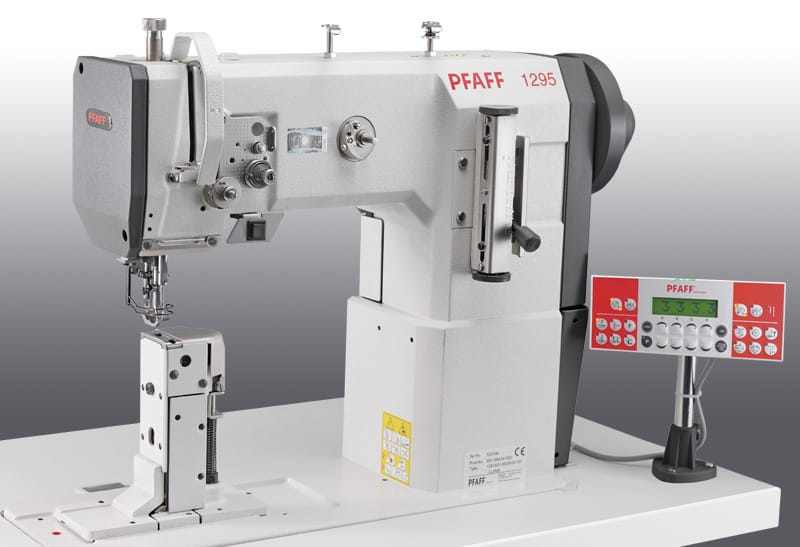
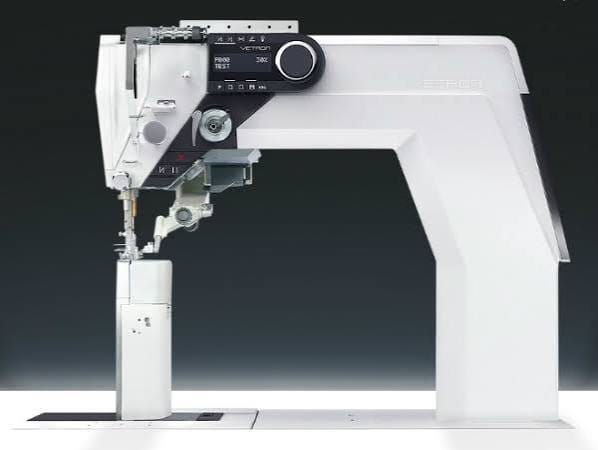
| Tight curves and pieces with volume | Post bed, which leaves the right-hand side of the needle free. Vetron 5300 (1 needle) · Vetron 5320 (2 needles) · DA H 868 · PFAFF 1295/96 PLUS |
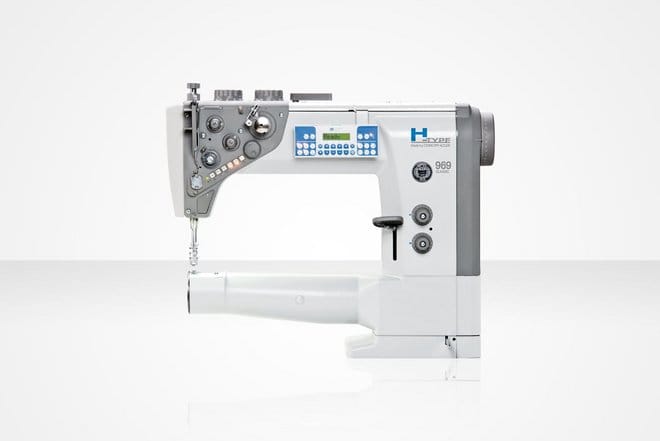
| Closing an already assembled cover | Free cylinder arm, to put the closed piece in and sew from the inside. DA H 969 · H 969-100 · DA Delta 669 |
| Piping and binding | Flatbed with binding guide. Vetron 4000/4010 [-13] |
| Slippery leather and open curves | Double feed with wheel presser foot, which rolls over the leather instead of marking it. DA M-Type 887 |
| Linings and pieces without foam behind | Double feed: lighter and faster when there aren’t two layers to even up. DA M-Type 827 |
Four machine levels
Within compound feed there are four steps. The seam is the same; what changes is how much the machine does by itself and how much thickness it can take. Choosing too little can’t be fixed with accessories, and choosing too much is money sitting idle.
| Level | What it includes and who it is for | Models |
|---|---|---|
| Basic | No automatic functions: you cut the thread by hand, lift the presser foot with the knee lifter and do the backtack yourself. Everything needed to sew well and nothing more. Made-to-measure workshops, varied pieces, restoration. | PFAFF 1245/46 ECO · DA 267 ECO · DA 267-373 and 269-373 · Typical TW1-1245 · Typical GC20665 |
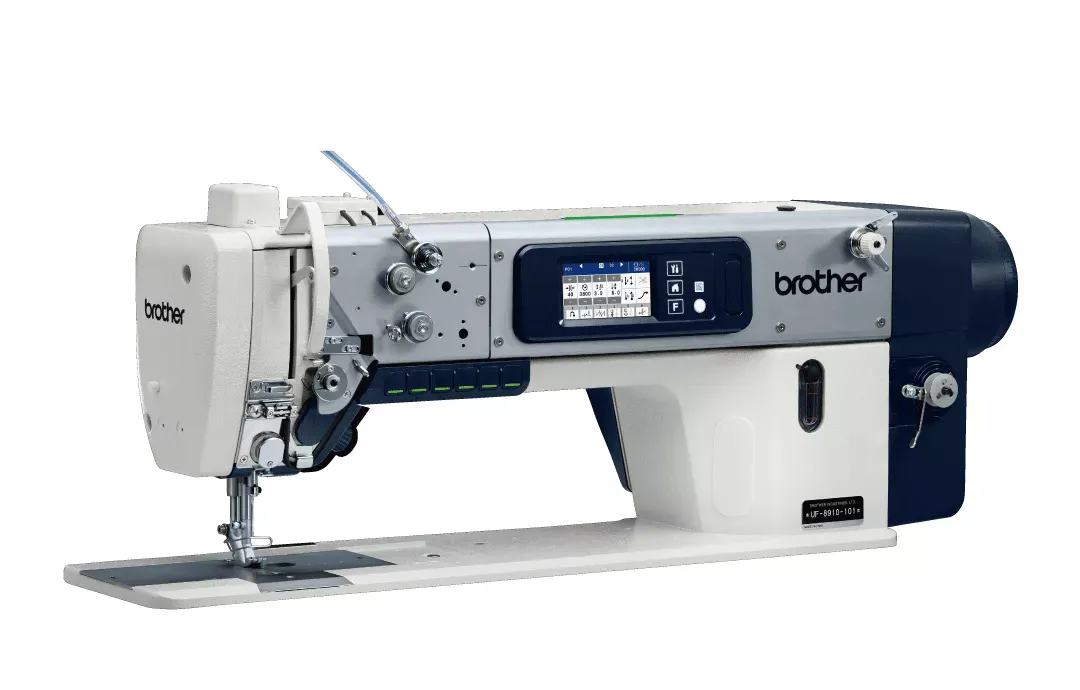
| Plus | Thread trimmer, automatic presser foot lift and automatic backtack. It removes three movements from every seam: over a full working day you notice it from the second hour, and the finish no longer depends on the operator’s hand. | PFAFF 1245/46 PLUS · DA M-Type 867 · DA M-Type 868 · DA Gamma 767 · Vetron 4000/4010 · Brother UF-8910/8920 · PFAFF 2545/46 PLUS · PFAFF 1295/96 PLUS (post bed) |
| Electronic | Panel and parameters by program: stitch length, number of backtack stitches, pressure and foot lift stored per model. This is what makes piece two hundred come out the same as the first. Series and contract. | DA Delta 867 · Delta 867 Long Arm · DA Delta 669 · Vetron 5000/5010 · Vetron 5000/5010 [-11] |
| Special (extra heavy-duty) | For very thick leather, heavy thread and thicknesses the others can’t handle: large-capacity hook, long stitch length and exceptional presser foot lift. It is not one more level of finish, it is another category of machine. | DA H 867 · H 868 (post bed) · H 967 · H 967-100 · H 969 · H 969-100 |
The material outweighs the level. With fabric and faux leather the decision is about production: basic if you work piece by piece, Plus or electronic if there are runs. With thick leather (full-grain leather upholstery, reinforced pieces, project seating) the conversation starts straight at the special level, however small the workload: there the limit isn’t set by production, it is set by thickness.
Cutting deserves a separate decision: fabric is spread and cut stacked, and leather is cut piece by piece with optimisation. You will find it under industrial cutting.
All the heavy-duty machines, brand by brand
Any of these could be the one that fits your workshop. They are sorted by brand; if you already know which operation you need to solve, the table above gets you there faster. The full list, with the other families, is under heavy-duty machines, and what each manufacturer does, under brands.

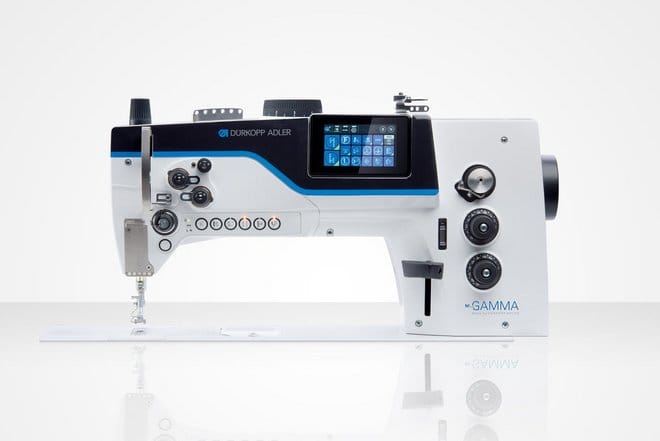
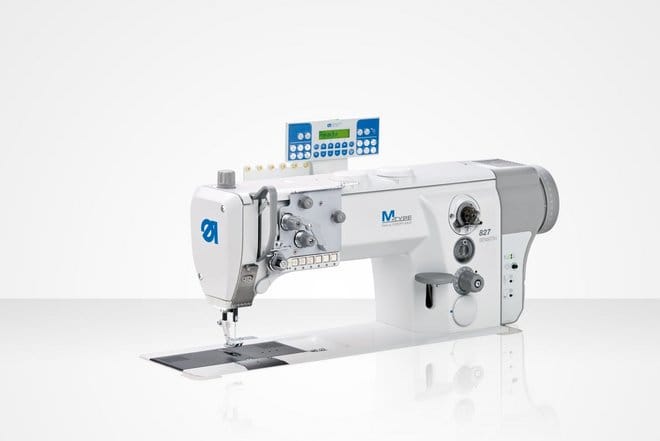
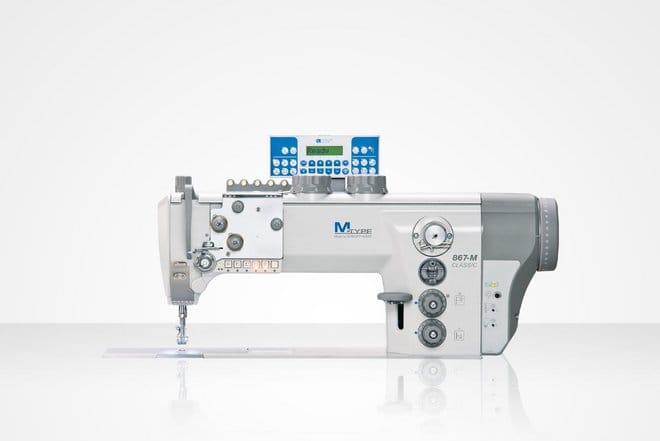
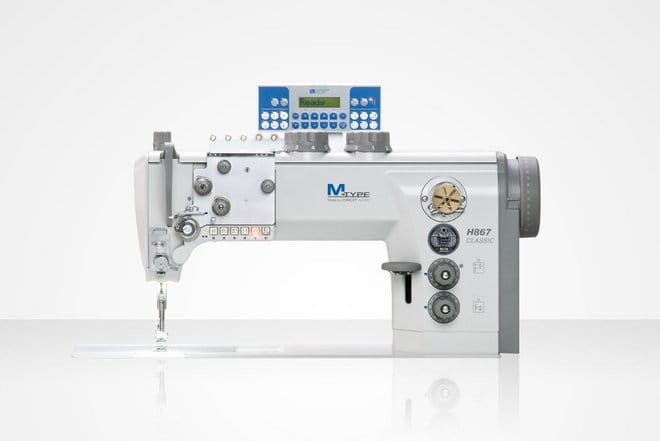
Dürkopp Adler
From the 267 ECO with no automatic functions to the extra-heavy H series for thick leather, by way of M-Type, Gamma and electronic Delta.




PFAFF Industrial
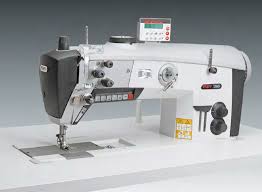
The 1245/46 in basic and automatic versions, the long-arm 2545/46 and the 1295/96 post bed.



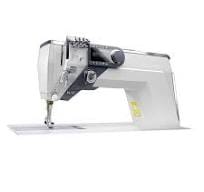
Vetron
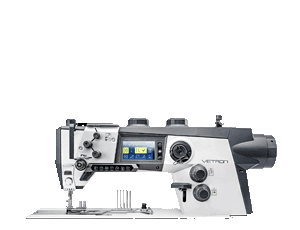
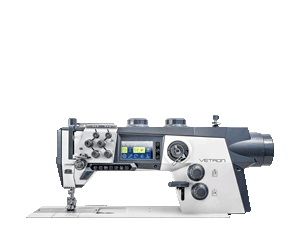
Direct drive flatbeds, two needles, binding guide, and the 5300 and 5320 post bed machines for pieces with volume.



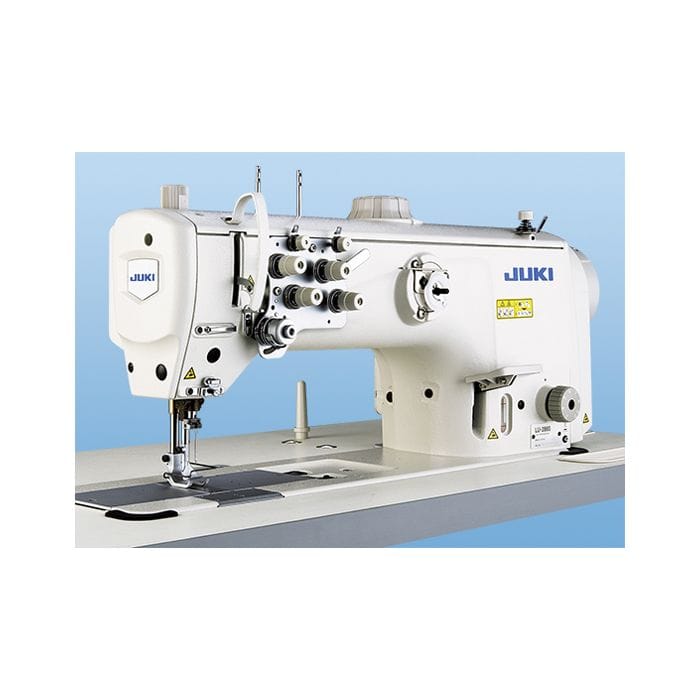
Juki
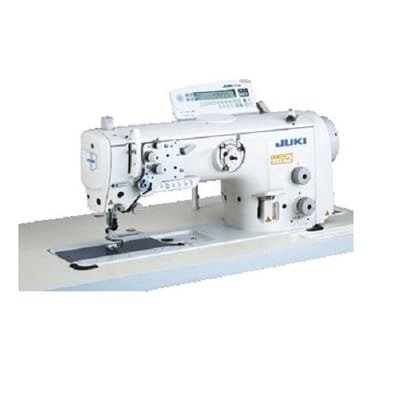
One and two-needle compound feed, well established in made-to-measure upholstery workshops.


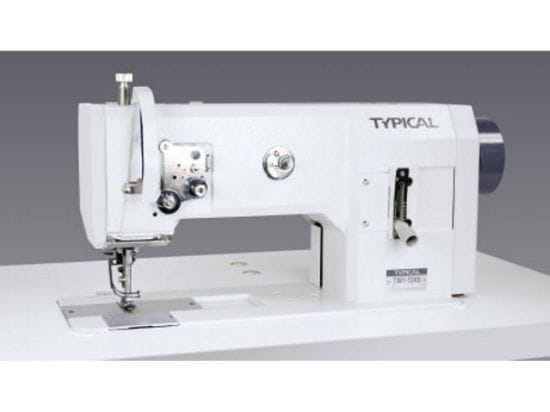
Typical
True compound feed at a moderate price, in one and two-needle versions.

Can’t see your machine or torn between two? Tell us the material, thickness and pieces per day and we will tell you which of these fits, and whether the one you already have will do.
Tell us what you upholster
Tell us what pieces you make, with which material and how many a day. With that we will tell you which machine fits, and whether the one you have will do.
Do you make mattresses rather than upholstered furniture? Then you will be interested in mattress machinery.