
Machinery for underwear, T-shirts and knitwear
T-shirts, sweatshirts, underwear and knitwear. Fabric that stretches, seams that have to stretch with it and a finish you notice when you put the garment on, not when you look at it.
In knitwear the most used machine isn’t the flatbed. It is the overlock, which joins, trims and overedges in one pass, and the coverstitch machine, which does the hem and neckline. Without a coverstitch machine there is no T-shirt with a professional finish: with a flatbed the hem doesn’t stretch and the seam bursts when you put it on.
What is made and with which materials
T-shirts, sweatshirts, knitted polo shirts, underwear, pyjamas, swimwear and knitwear in general. Single jersey, interlock, rib, fleece and fabrics with elastane.
Overlock and coverstitch: the minimum pair
Assembly is done with a four-thread overlock (514), which stretches with the garment. The finish is done with a coverstitch machine (602/605): T-shirt hem, sleeve hem, bound neckline and underwear elastic. For sleeve hems and closed pieces, a coverstitch machine with a cylinder bed, which lets you put the piece over the arm instead of fighting with it.
The needle, more important than the machine
The most common fault in knitwear isn’t the machine, it’s the needle. A regular point pierces the yarn of the knit and breaks it; after a few washes a ladder appears next to the seam. Knits are sewn with a ball point: SES for fine knits and SUK for medium knits and fabrics with elastane. And the size: as fine as the thread allows.
The machines, brand by brand
What goes into a knitwear workshop: overlock and coverstitch as the base, multi-needle for waistbands and elastics.

Pegasus
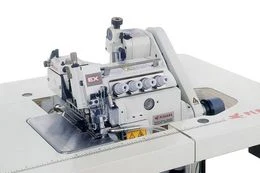
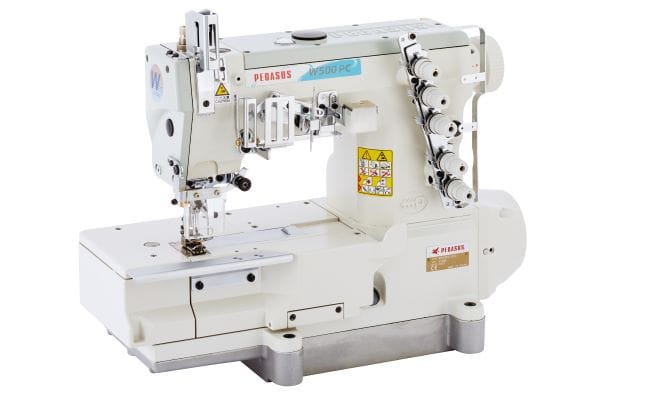
The pair that sustains any knitwear workshop: four-thread overlock and coverstitch, flatbed and cylinder bed.




Juki
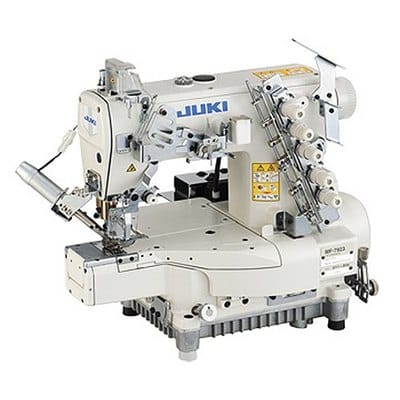
Overlock and coverstitch for T-shirts, sweatshirts and underwear.



Kansai Special
Multi-needle for underwear waistbands, elastic tapes and decorative topstitching on knits.


Tell us what you make
We analyse the garment, fabric and production before recommending anything. Request technical advice.