
Mattress machinery: tape edge closing and cover sewing
Tape edge closing and sewing of mattress covers and panels. Two very different operations, with machines that can’t replace each other.
A mattress is an edge product: what you see in the shop and what fails with use is the perimeter. That is why the machine that defines a mattress workshop is not the one that sews the panel, but the one that closes the edge.
Tape edge closing
This is the final operation: joining the top panel, the side border and the bottom panel with a tape that finishes the whole perimeter of the mattress. It is done with the mattress assembled, turning on itself, and the machine has to follow the edge without the seam wandering or puckering at the corners.
Why a dedicated machine
No conventional flatbed can sew the edge of a piece twenty or thirty centimetres thick while keeping the tape centred. It is a workstation in its own right, with its own tape feed and guiding.
The corners
The critical point is the four corners: that is where the tape wrinkles if speed and tension aren’t right. It is the first thing to test with your mattress and your tape.
Sewing and overlocking of covers and panels
Before closing comes everything else: the cover, the side border, the reinforcements and the zip on removable covers. These are long seams on thick, quilted material, which needs powerful feed and good presser foot lift.
Compound feed flatbed
For borders, reinforcements and zips on quilted fabric, where the top layer tends to lag behind.
Overlocker
For closing and finishing cover edges cleanly, on material that frays.
Multi-needle
For the side border and multi-needle decorative seams at a fixed gauge, where the topstitching has to come out straight and repeated over metres.
See sewing machines, overlock machines and multi-needle machines.
How to size the workstation
| If your case is | Where to start |
|---|---|
| Workshop making custom mattresses and short runs | First get the cover sewingright, and consider edge closing when volume calls for it. |
| Continuous mattress production | The edge closing sets the pace of the whole line. It is sized by mattresses per day, not by metres of seam. |
| Removable covers and replacements | The weight is on zips and finishing: flatbed, overlocker and multi-needle well adjusted to the quilting you use. |
Tell us the mattress thickness, type of tape and how many units a day, and we will tell you which configuration fits. If necessary, we test with your material first.
The machines, brand by brand
What we install in a mattress workshop. Edge closing is handled by a dedicated automatic unit; the rest are sewing workstations that prepare the cover before it gets there.

Dürkopp Adler
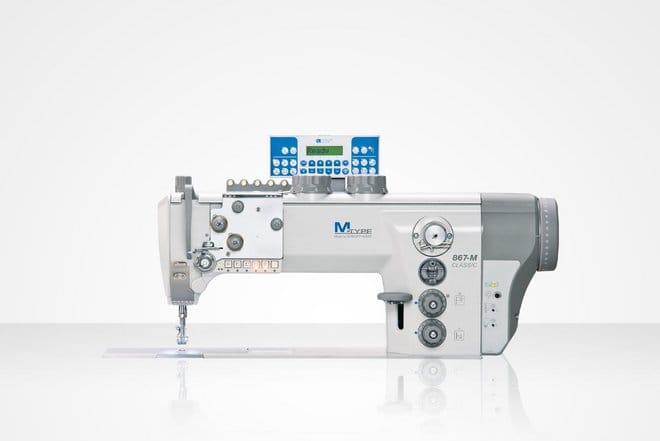
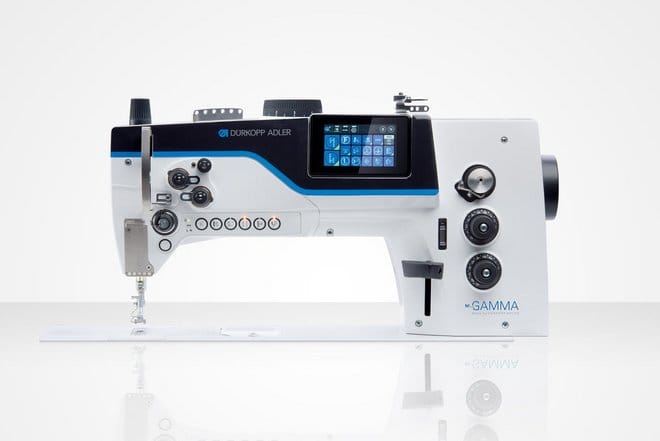
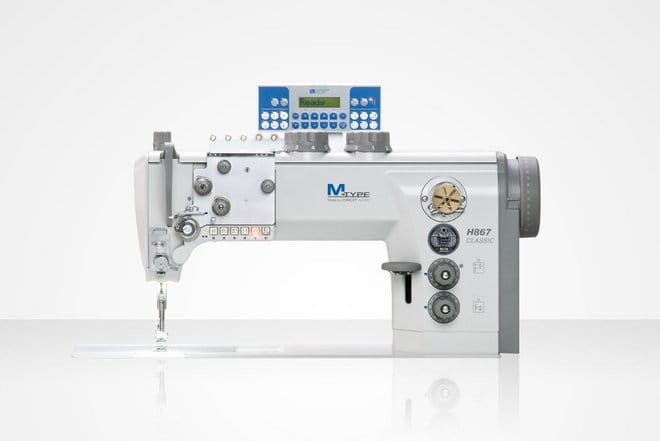
Compound feed for borders, reinforcements and zips on quilted material, and the H series for thicknesses a normal flatbed can’t handle. Includes the head fitted to the mattress closing unit.
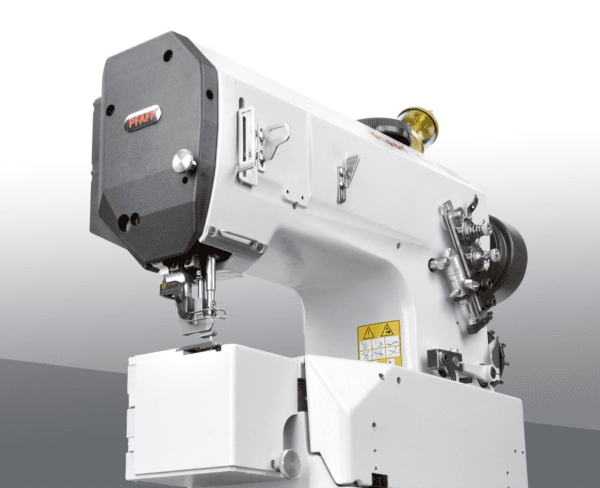

Pegasus
Heavy-duty overlocking of cover and panel edges, on thick material that frays.
 EXT-H 3216 / EXT 3216

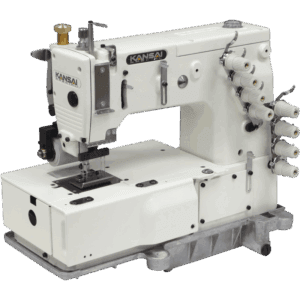
Kansai Special
Multi-needle for the side border and multi-needle topstitching at a fixed gauge, straight and repeated over metres.
The EXT-H 3216 / EXT 3216 doesn’t have a published data sheet yet; if you are interested, we can send you the documentation by email. Tell us the mattress thickness, type of tape and units per day and we will tell you which configuration fits.
Tell us about your mattress
Thickness, type of cover and units per day. With those three facts we will tell you which machine you need and in which order it is worth buying.
Do you upholster furniture rather than make mattresses? Then you will be interested in furniture upholstery machinery.