
Machinery for automotive seats: joining seams, decorative seams, documented seams and headrests
What each operation on a seat cover in leather, faux leather, Alcantara or laminated fabric demands, and which machine does it: compound feed for joining, two needles and automatic units for decoration, programs with recording for safety seams, and post bed for headrests.
The seat is the part of the car that is seen and touched most. A cover is sewn from many small pieces that are then stretched over the foam, and any defect is multiplied: a topstitch that wanders two millimetres on the machine is a crooked line once the cover is fitted. That is why we organise it by operation: each one asks something different of the machine.
The operations of a seat cover
And two operations that go with them: leather cutting and seam sealing.
1. Joining seams
These assemble the cover: they join the cushion and backrest pieces, the sides and the anchoring strips that hold it to the frame. There is almost always laminated foam or several layers of different hardness, and that is the problem: with bottom feed only, the top layer lags behind, the piece comes out longer on one side and wrinkles appear when the cover is fitted.
What to ask of the machine:
- Compound feed (feed dog, needle and alternating presser foot) so that the layers move together.
- Presser foot lift and a large hook to handle thickness with heavy thread.
- Automatic backtack and thread trimming if you sew in series.
Compound feed flatbeds for joining seams
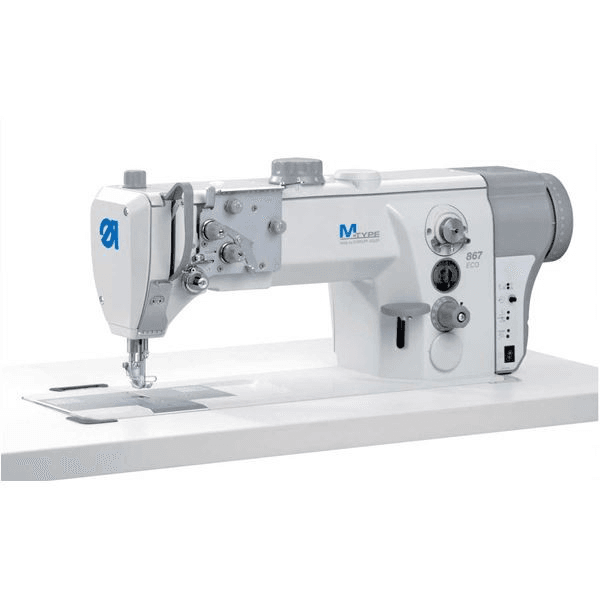
Dürkopp Adler 867 Basic
Compound feed flatbed, 1 needle. The standard for joining covers in production.
See data sheet →
Dürkopp Adler 867 M-Type Silverline
Compound feed, 1 needle, with automatic thread trimming, backtack and presser foot lift.
See data sheet →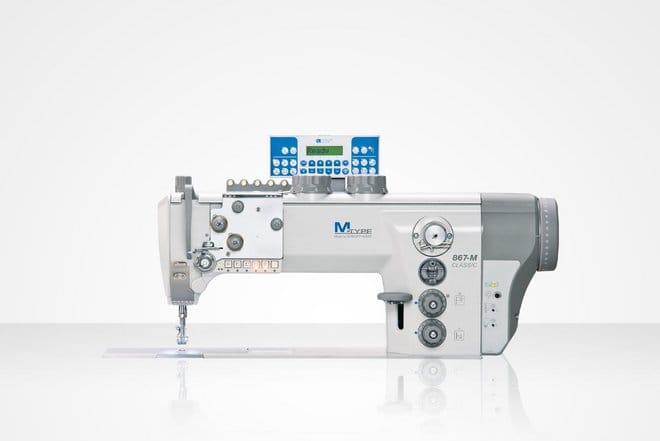
Dürkopp Adler 867 M-Type Goldline
The 1-needle 867 with the highest level of equipment on the M-Type platform.
See data sheet →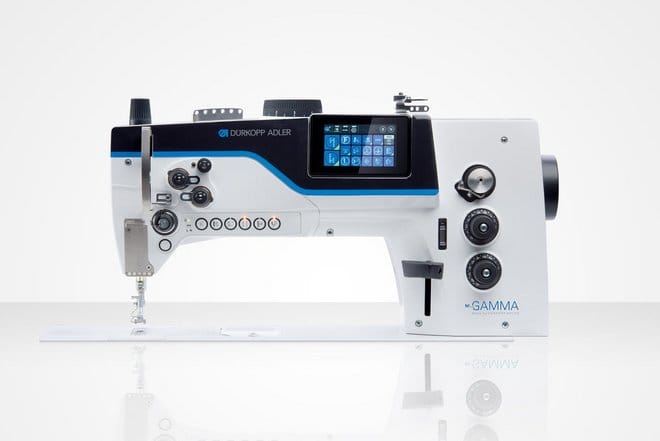
Dürkopp Adler Gamma 767
Compound feed flatbed with 1 or 2 needles for joining in leather and upholstery.
See data sheet →
Dürkopp Adler 267-373
Entry-level compound feed for joining leather, faux leather and laminated fabric.
See data sheet →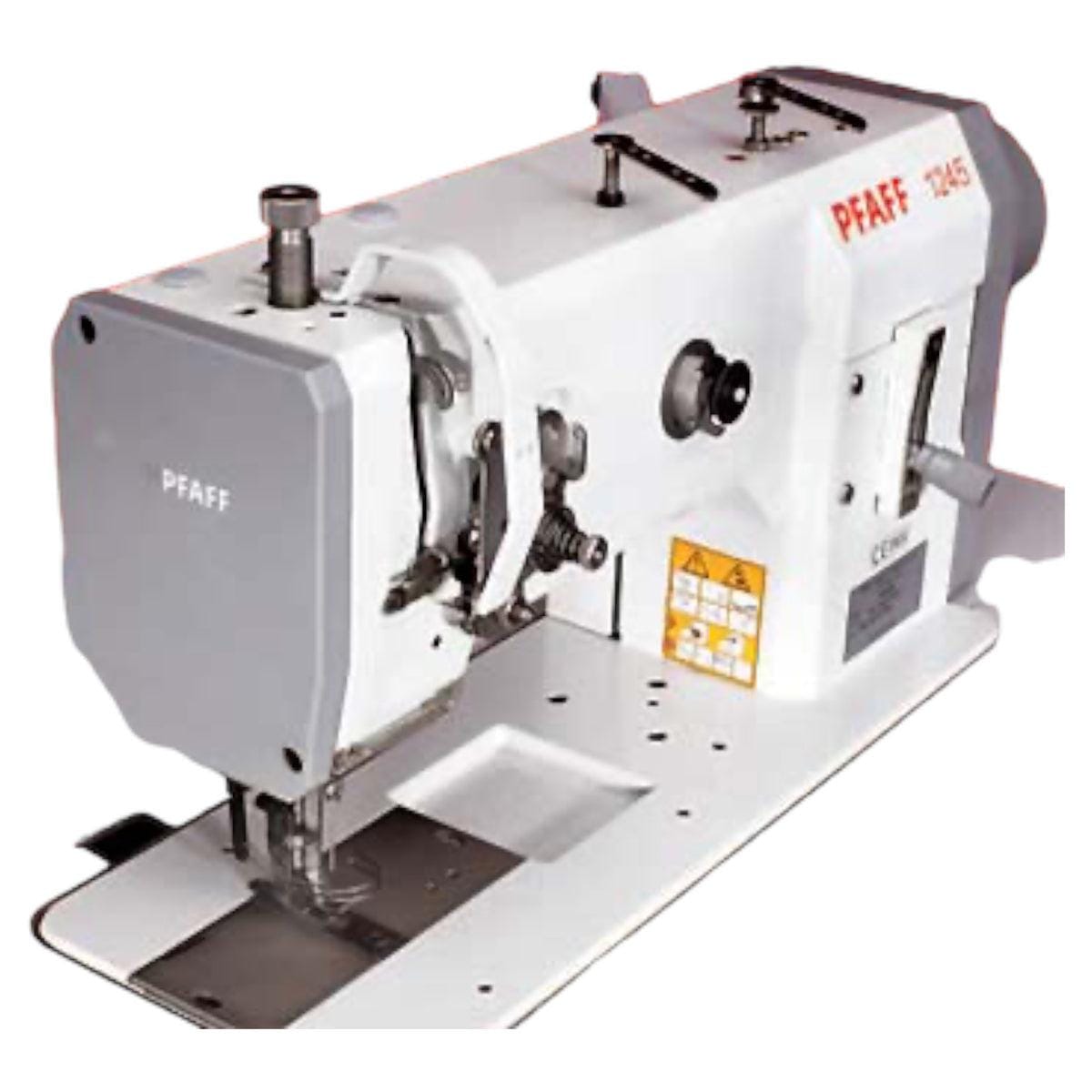
PFAFF 1245
Robust, versatile compound feed. Very common in replacement upholstery.
See data sheet →
Vetron 4000 / 4010
1-needle flatbed, compound feed and direct drive, for medium and heavy material.
See data sheet →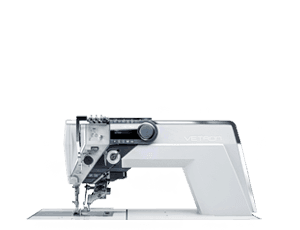
Vetron 5000 / 5010
Vetron’s premium range: compound feed, 1 needle and superior equipment.
See data sheet →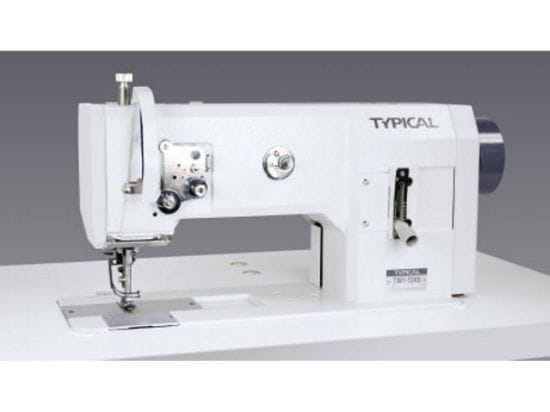
Typical TW1-1245
1-needle compound feed flatbed, 26 mm vertical hook, for medium and heavy material.
See data sheet →
Typical GC20665
1-needle compound feed with 750 W direct drive and pneumatic automatic functions.
See data sheet →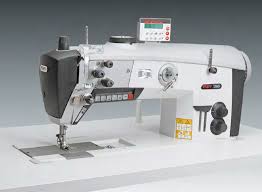
PFAFF 2545/46 PLUS
Compound feed, 1 or 2 needles, vertical axis hook, automatic backtack and thread trimming.
See data sheet →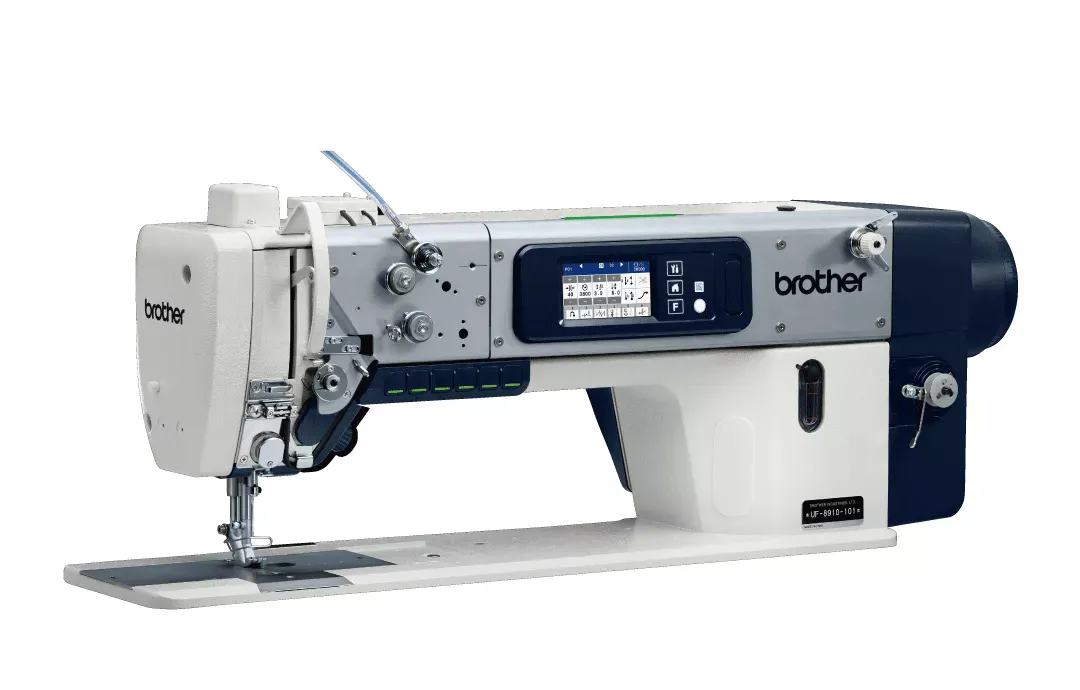
Brother UF-8910 / UF-8920
Compound feed, 1 or 2 needles, vertical axis hook, backtack and thread trimming.
See data sheet →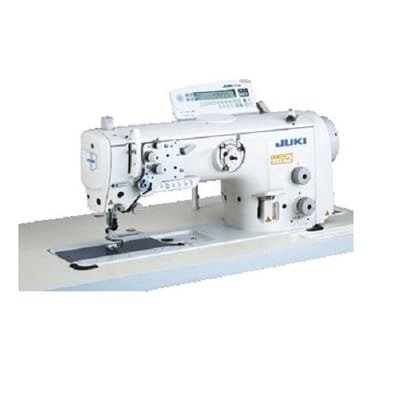
JUKI LU-2810
Heavy-duty compound feed, 1 needle, vertical axis hook.
See data sheet →Double feed flatbeds: joining lighter material
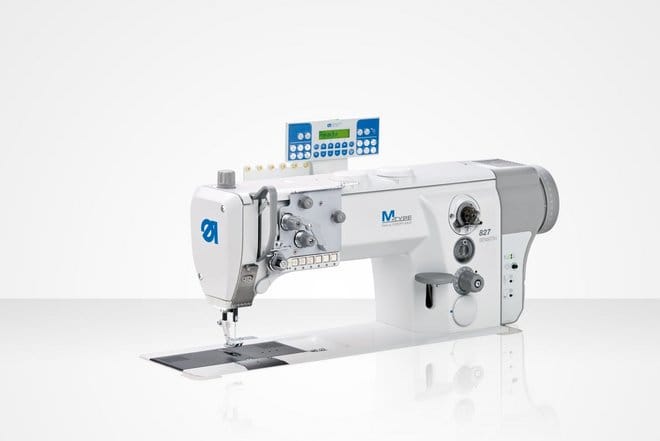
Dürkopp Adler M-Type 827
Double feed, 1 or 2 needles, with backtack and thread trimming. For fabric and faux leather without thick foam.
See data sheet →
Dürkopp Adler M-Type 887
Double feed with wheel foot, 1 or 2 needles. Follows curves well when joining thin pieces.
See data sheet →Delta electronic flatbeds

2. Decorative seams
Visible topstitching is the signature of the seat and the least forgiving seam. The most common is the French seam: it is joined with one needle, the seam allowances are opened and it is topstitched on the outside on both sides with two needles. Also parallel double topstitching with heavy thread and quilting in diamonds or patterns on the cushion and backrest.
When the piece already has volume (wraparound sides, backrest corners, headrests), the decorative topstitching is done on a post bed machine: the needle works on top and the piece turns freely around it, so the topstitching follows the curve without wrinkling the material.
What to ask of the machine:
- Two needles with the needle gauge of the model’s design.
- Long, consistent stitch length with heavy thread, without skipping stitches.
- If the design has tight corners, a disengageable needle bar: ask us about those versions.
- On pieces with volume, 1 or 2-needle post bed with wheel feed or compound feed.
- For pattern quilting, a pattern sewer: an operator can’t repeat a diamond a hundred times identically.
Decorative topstitching and French seams
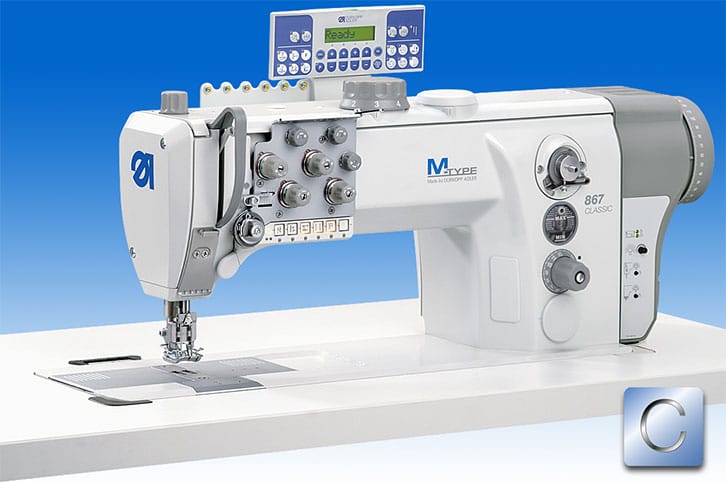
Dürkopp Adler 867 Classic 2 needles
Two-needle compound feed for double topstitching and French seams.
See data sheet →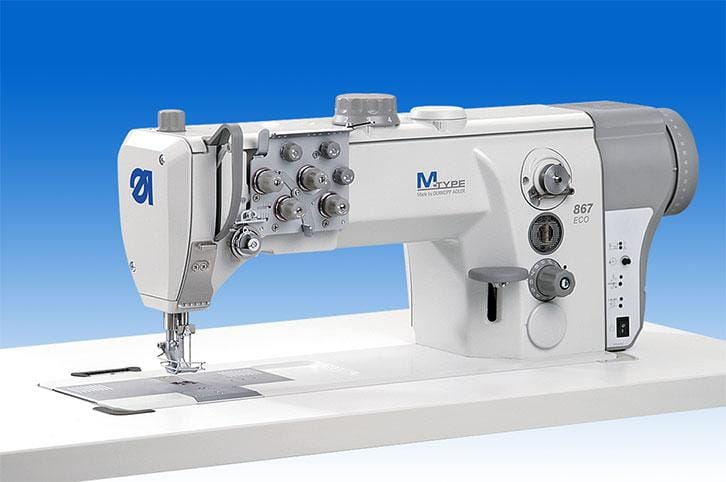
Dürkopp Adler 867 Eco 2 needles
Two needles and compound feed in an Eco version for decorative topstitching.
See data sheet →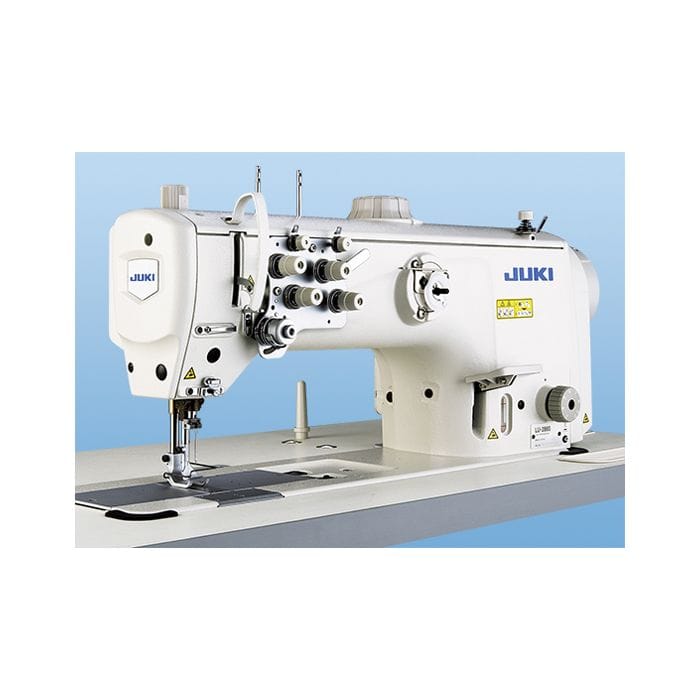
JUKI LU-2860
Heavy-duty 2-needle compound feed with vertical axis hook.
See data sheet →
Typical GC20666 2 needles
2-needle compound feed with 750 W direct drive, for double topstitching and French seams.
See data sheet →
Vetron 4020 / 4030
2-needle flatbed, compound feed and direct drive for parallel double topstitching.
See data sheet →1-needle post bed: visible topstitching on pieces with volume
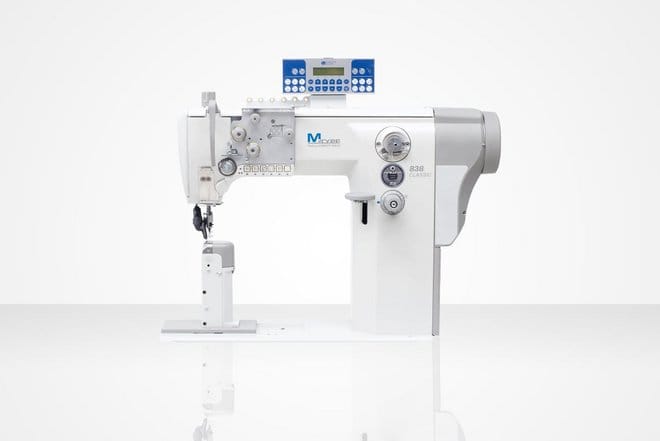
Dürkopp Adler 838-1
1-needle post bed with bottom feed and top roller.
See data sheet →
Dürkopp Adler 888-1
1-needle post bed with toothed wheel feed, for curves in leather.
See data sheet →
Dürkopp Adler Delta 888-1
Electronic post bed on the M-Type platform: programmed parameters.
See data sheet →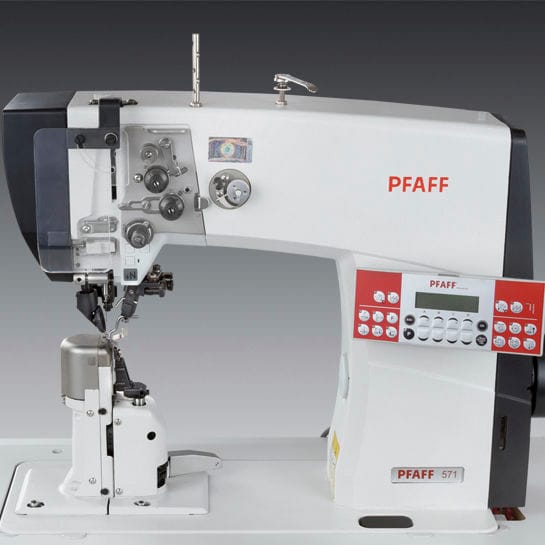
PFAFF 571-1i
Fast 1-needle post bed, post on the left.
See data sheet →
PFAFF 591-1
Fast 1-needle post bed, post on the right.
See data sheet →
PFAFF 1571-1
Electronic 1-needle post bed, post on the left.
See data sheet →
PFAFF 1591-1
Electronic 1-needle post bed, post on the right.
See data sheet →
PFAFF 1293-1
Robust 1-needle post bed for thicker material.
See data sheet →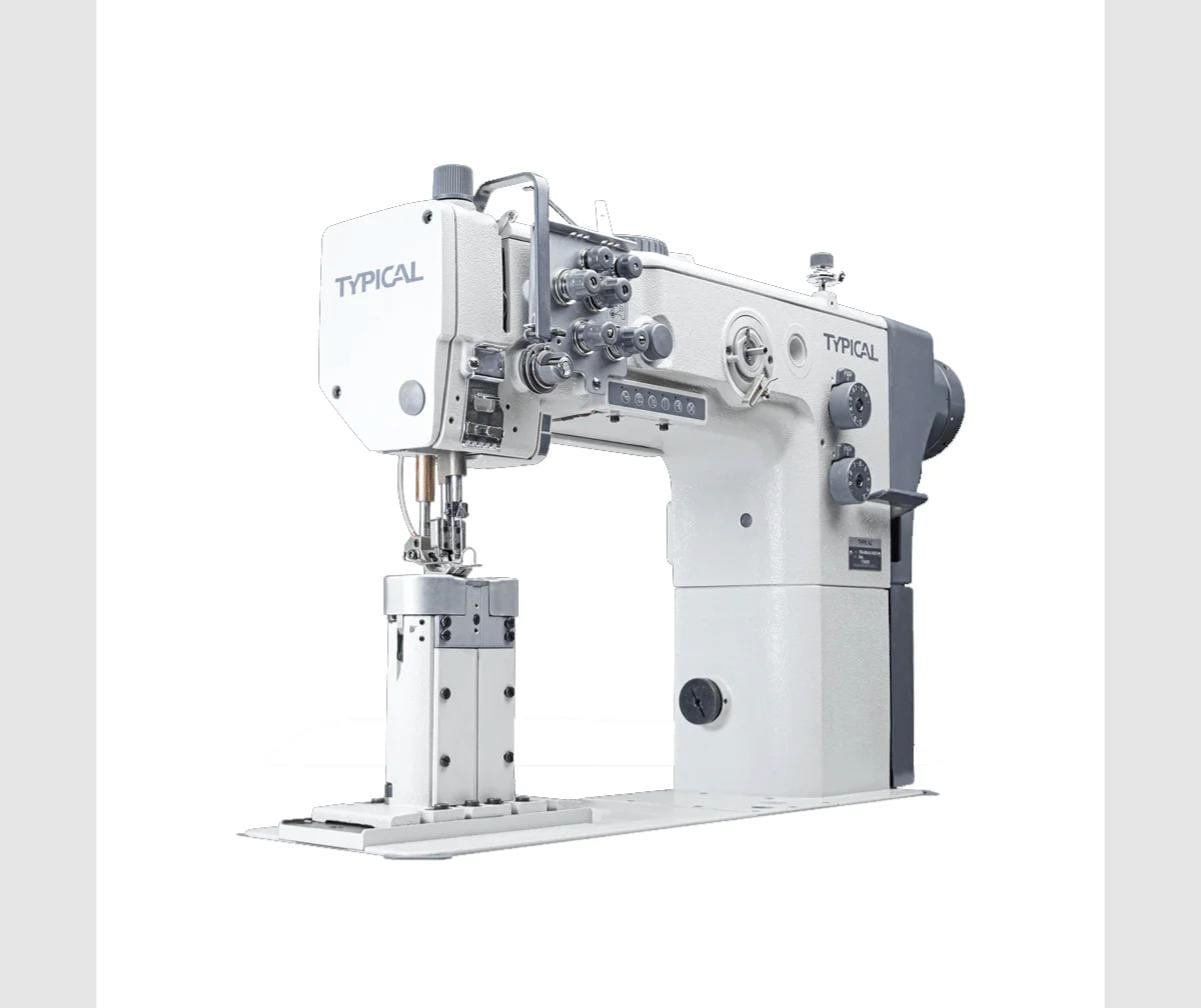
Typical TW5-898-1
Direct drive 1-needle post bed with compound feed, medium-heavy material.
See data sheet →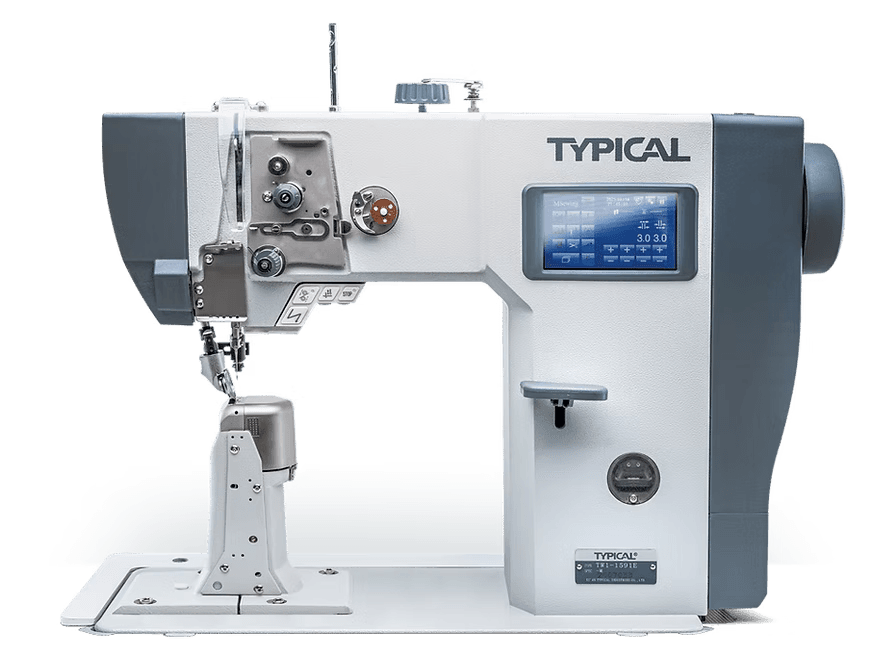
Typical TW1-1591E
Electronic 1-needle post bed with wheel, motorised roller and touch screen.
See data sheet →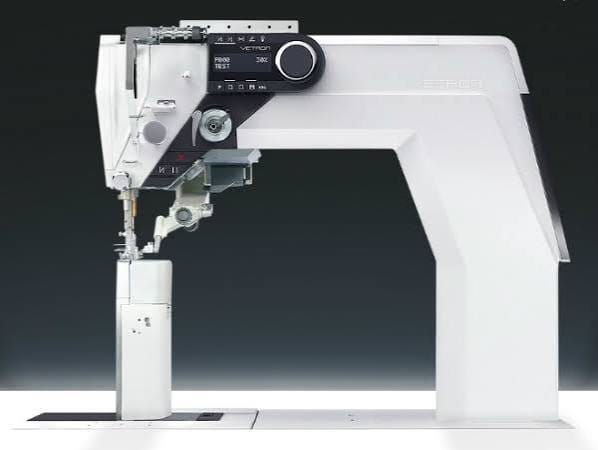
Vetron 5300
1-needle post bed, compound feed and direct drive, with automatic thread tension and presser foot pressure.
See data sheet →2-needle post bed: double topstitching on pieces with volume

Dürkopp Adler 838-2
2-needle post bed with bottom feed for double topstitching.
See data sheet →
Dürkopp Adler 888-2
2-needle post bed with wheel feed, double topstitching on curves.
See data sheet →
PFAFF 574-2
Fast 2-needle post bed, with edge trimmer available.
See data sheet →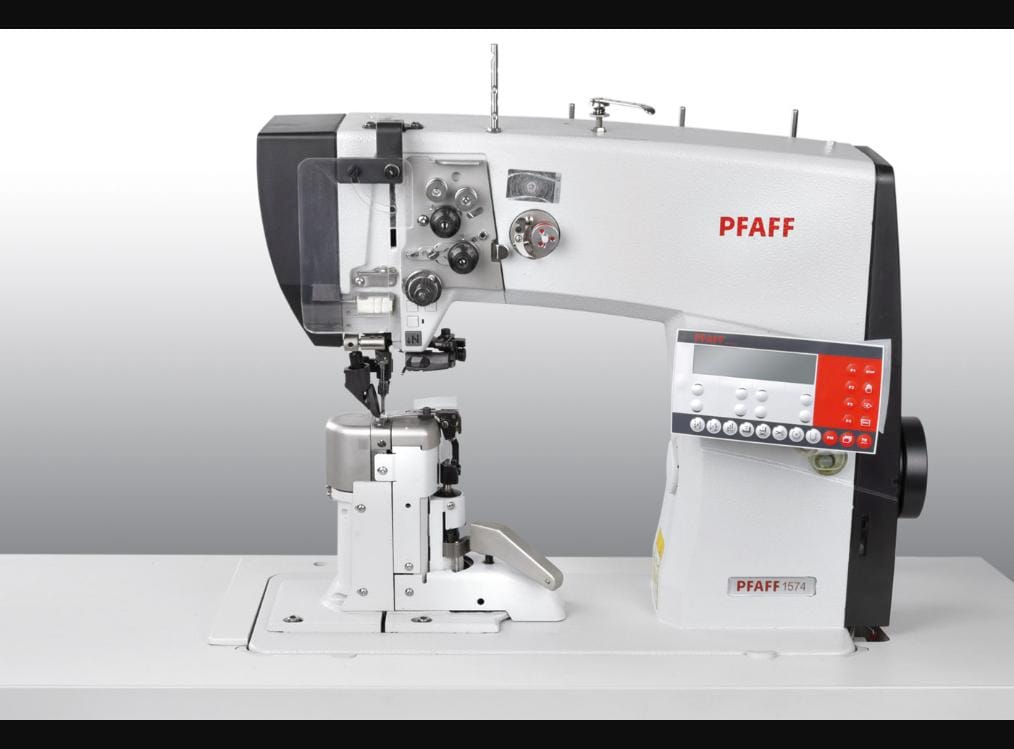
PFAFF 1574-2
Electronic 2-needle post bed.
See data sheet →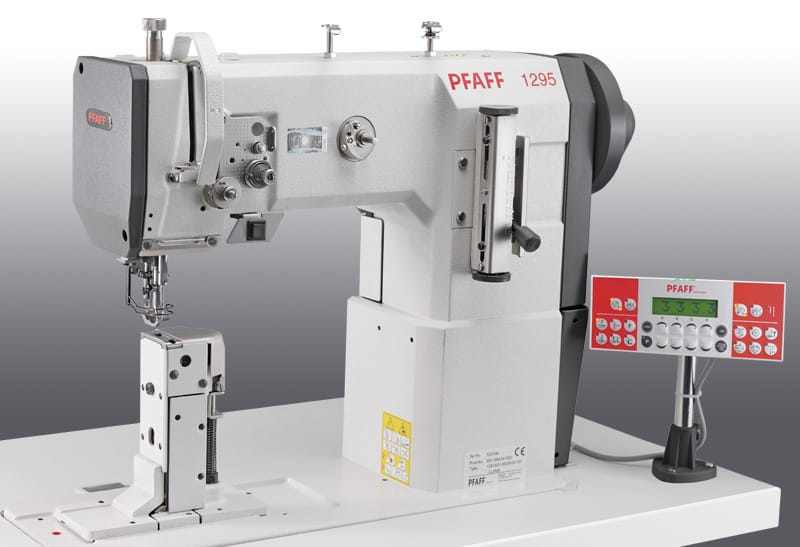
PFAFF 1295/96 PLUS
Compound feed post bed, 1 needle (1295) or 2 needles (1296).
See data sheet →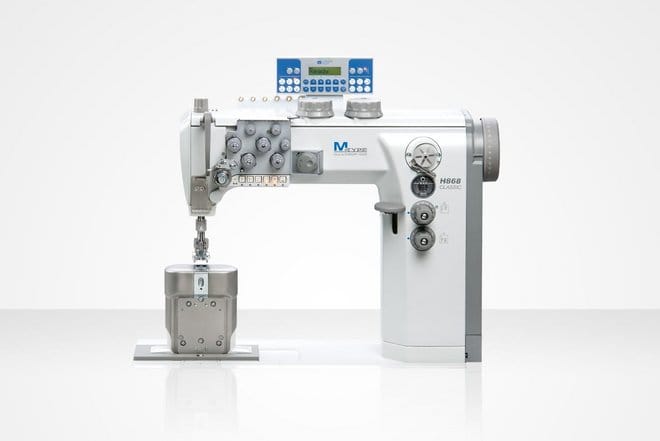
Dürkopp Adler H 868
1 or 2-needle post bed with compound feed for very heavy material.
See data sheet →Typical TW5-898-2
Direct drive 2-needle post bed with compound feed, medium-heavy material.
See data sheet →
Vetron 5320
2-needle post bed with compound feed, gauges from 6 to 12 mm, for decorative double topstitching.
See data sheet →Quilting and programmed patterns
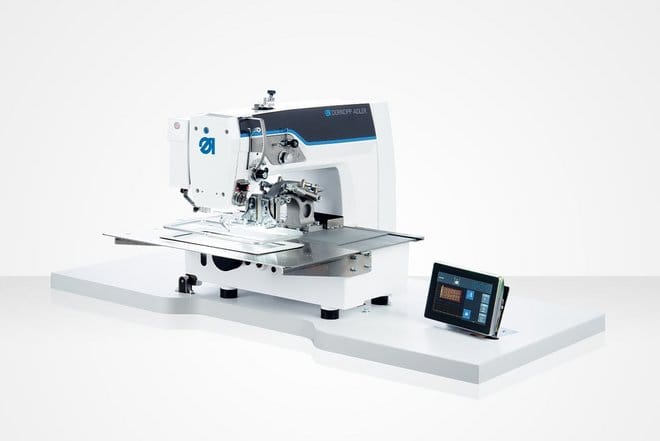
Dürkopp Adler 910
Small-field CNC up to 300 × 200 mm and 2,800 spm, with programmable tensions and DXF import.
See data sheet →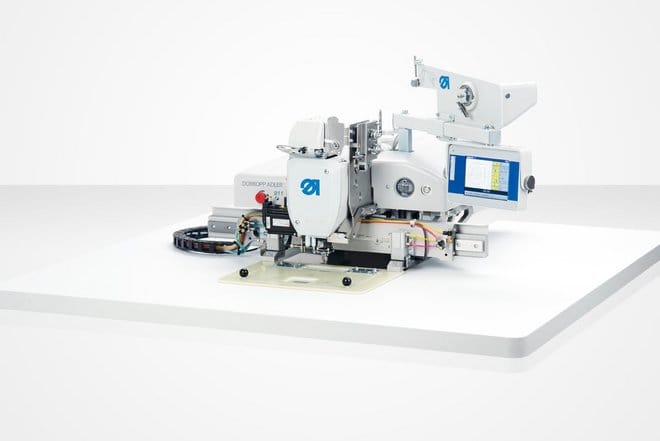
Dürkopp Adler 911R-210-10
CNC with unlimited rotating head: perfect decorative topstitching on seat curves.
See data sheet →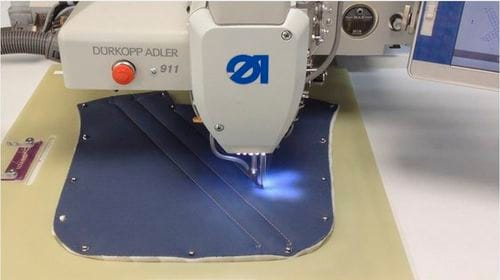
Dürkopp Adler 911-210-10
CNC for medium-heavy material with XXL hook and thread break detection.
See data sheet →
Dürkopp Adler 911-211-10
CNC for heavy material: 40 mm 3XL hook and thread up to 8/3.
See data sheet →
PFAFF 3590 Portal
Large-format programmable sewing for quilting and patterns on panels.
See data sheet →
Brother Nexio BAS-375H
Bridge-type pattern sewer with 1200 × 700 mm sewing area.
See data sheet →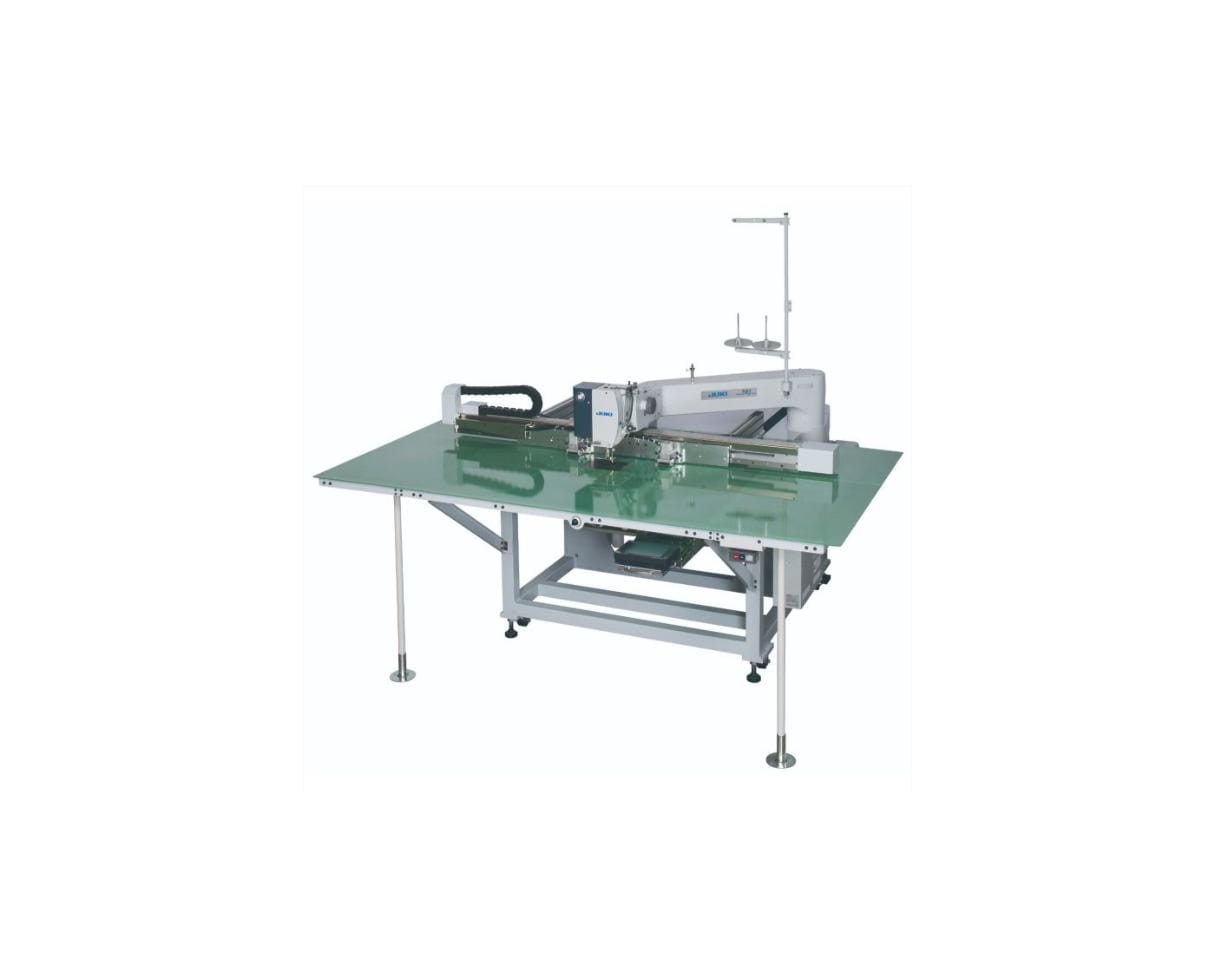
JUKI PLK-J10050RH
1000 × 500 mm pattern sewer for heavy materials.
See data sheet →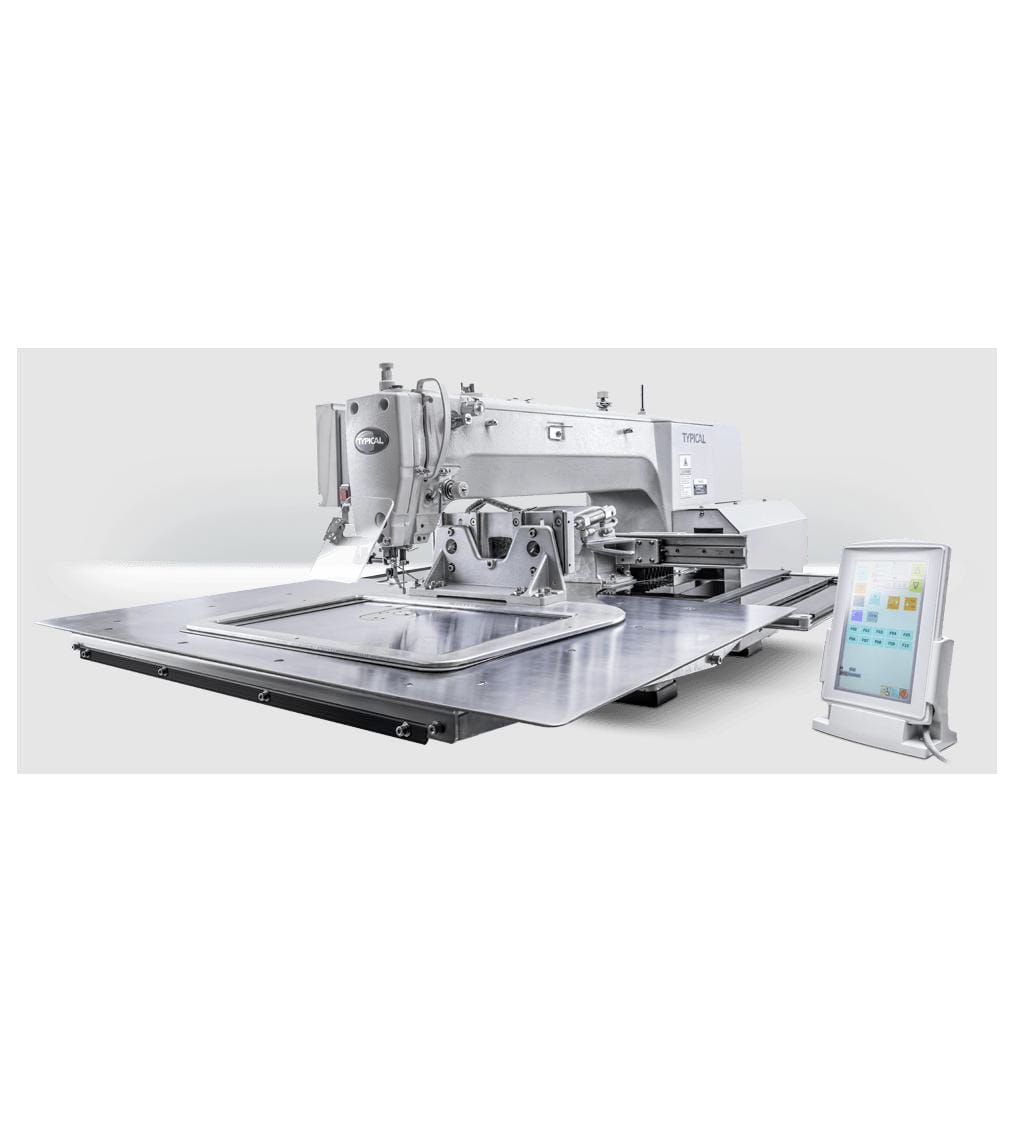
Typical TC3020GB-1A
300 × 200 mm pattern sewer: small patterns, reinforcements and detail pieces.
See data sheet →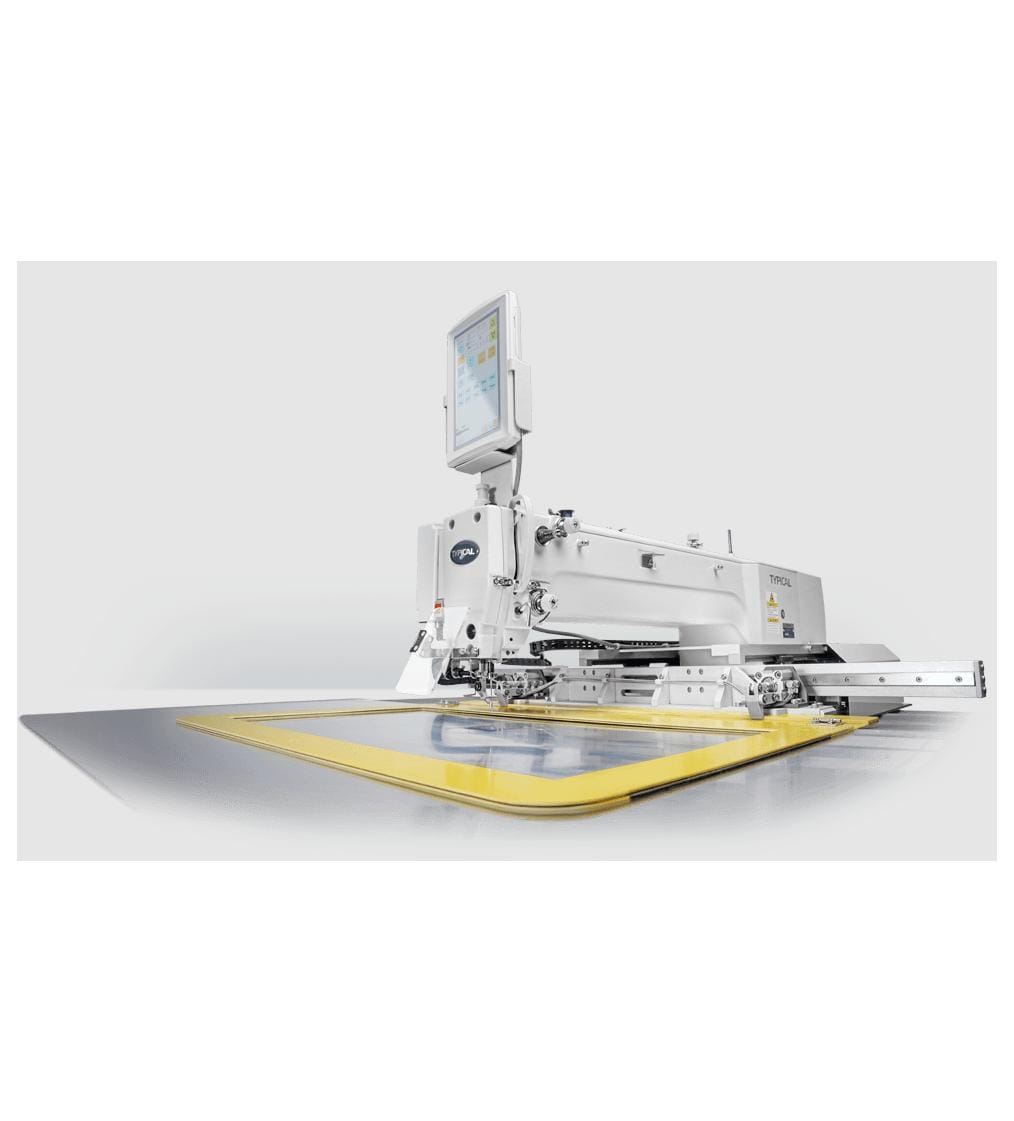
Typical TC6040GB-1A
600 × 400 mm pattern sewer with servo motors, for medium-format panels.
See data sheet →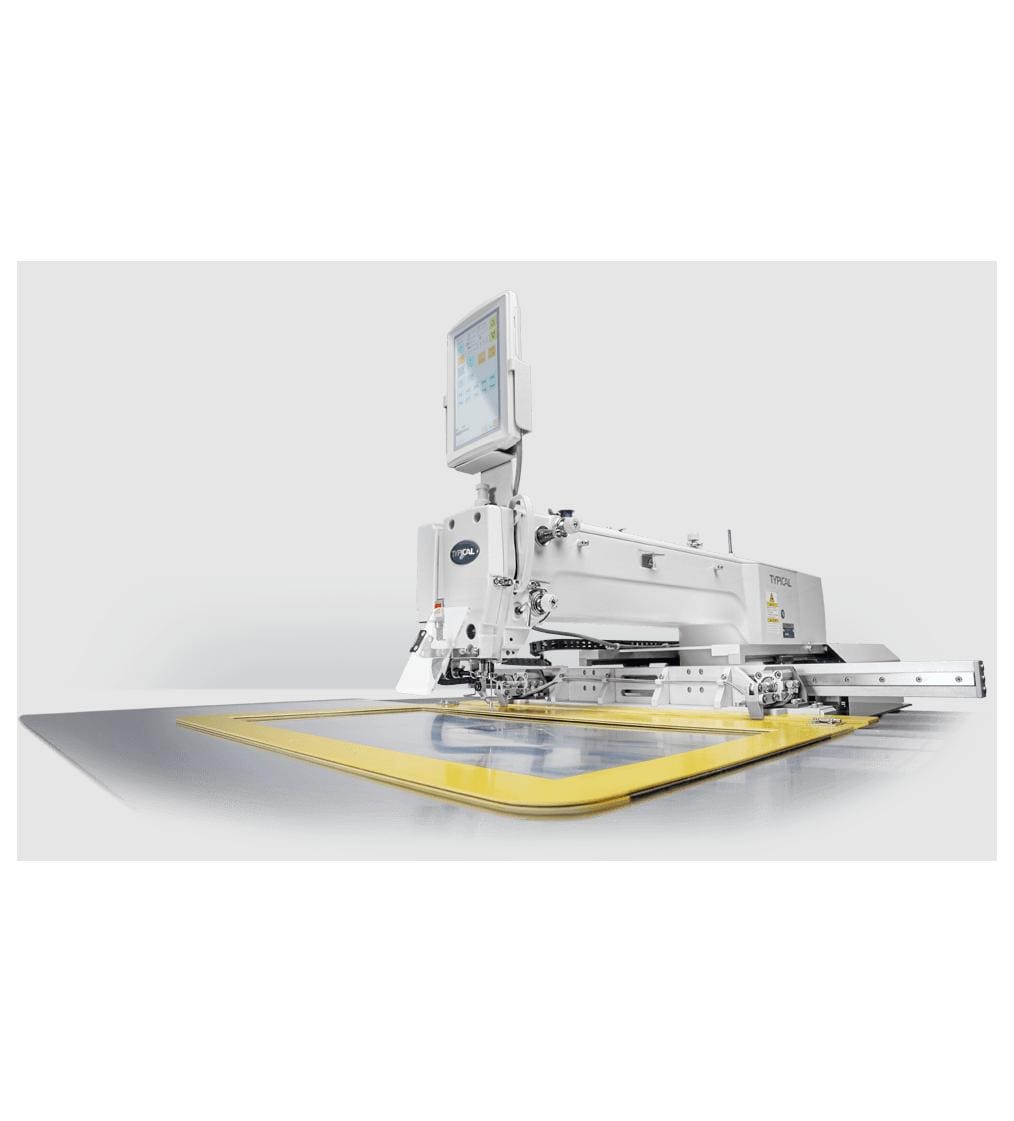
Typical TC12080GB-1A
1200 × 800 mm pattern sewer for quilting whole cushions and backrests.
See data sheet →3. Documented seams
These are the seams for which the car manufacturer requires proof of how each piece was sewn. The typical case is the side airbag tear seam built into the backrest: it has to open exactly where intended when the airbag deploys. A skipped stitch, a different thread or a different tension changes how it tears, and that can’t be seen with the naked eye.
What to ask of the workstation:
- Monitoring of every stitch, with skipped stitch detection.
- Continuous measurement and control of thread tension, and bobbin thread monitoring.
- Identification of thread and bobbin by code, so nothing is sewn with a material that is not to specification.
- Recording per seam: parameters, operator and final label, with traceability back to the cover.
An electronic flatbed can’t do this on its own: you need a system that measures, blocks errors and documents. That is what the Dürkopp Adler 550-D800 modular system and the PFAFF 3721 and 3745 Docu-Seam-Systems are for.
Systems for documented seams

Dürkopp Adler 550-D800
Modular workstation that monitors every stitch, the tension and the bobbin, and documents every airbag seam.
See data sheet →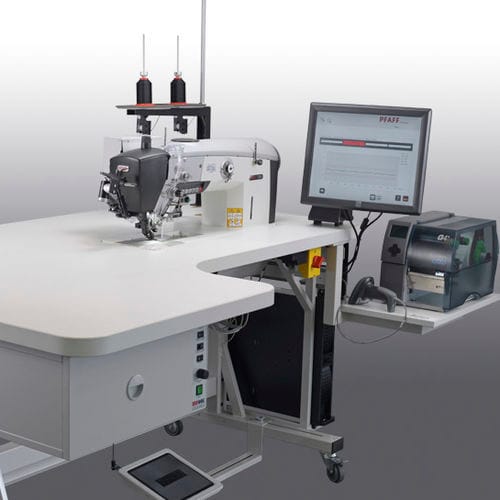
PFAFF 3721 PREMIUM
Docu-Seam-System for the airbag tear seam: rejects invalid seams in real time.
See data sheet →PFAFF 3745 PREMIUM
Docu-Seam-System with unison feed and stitches up to 9 mm, for covers with foam or several layers.
See data sheet →4. Headrests
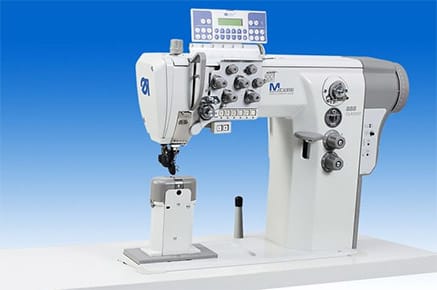
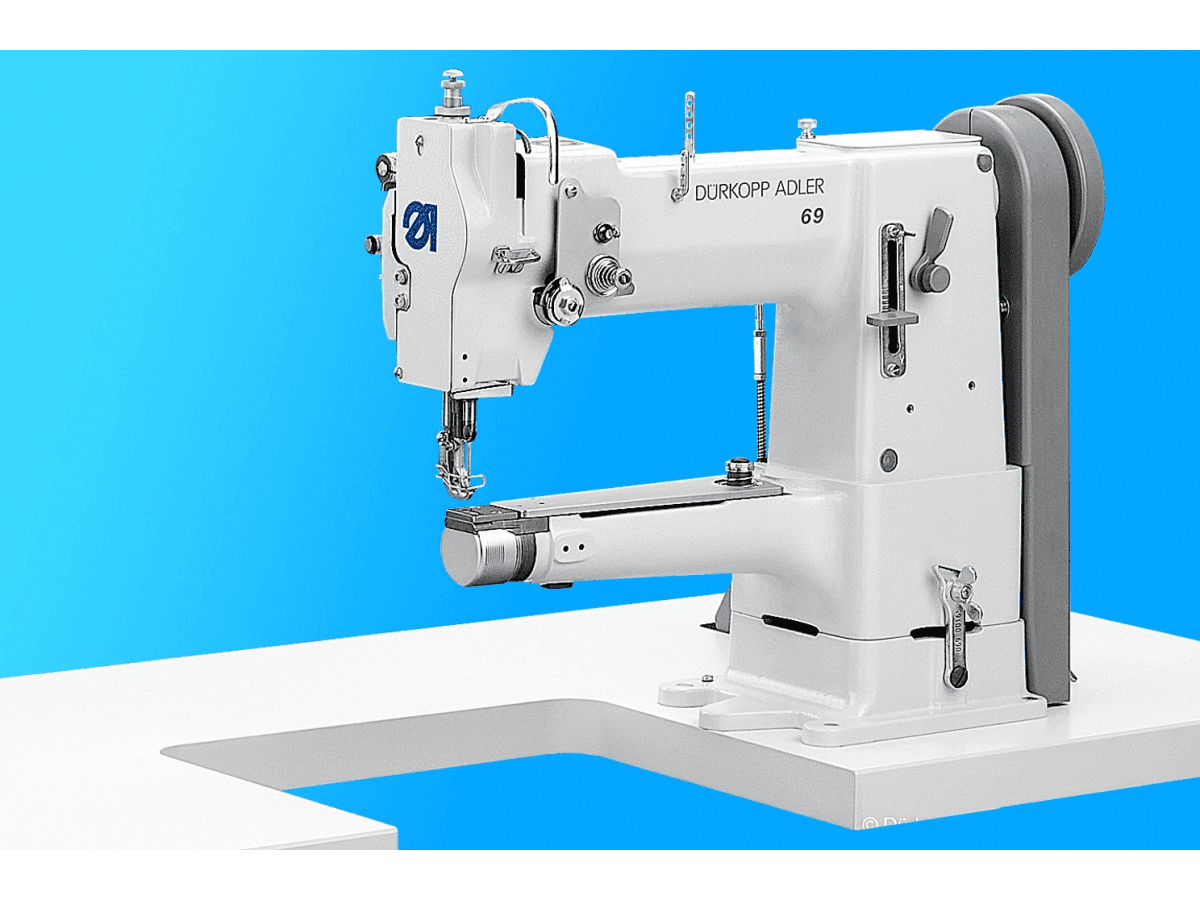
The headrest cover is small, has tight radii and closes on itself. On a flatbed the piece has no support and the curved seam opens. It is sewn on a post bed, where the needle works on top and the piece turns freely around it, and pieces that are already closed are finished on a cylinder bed. It usually also has decorative topstitching to match the seat and openings for the rods.
What to ask of the machine:
- Post bed with feed that follows the curve without pulling the piece outwards.
- Compound feed or wheel feed depending on material and radius.
- One or two needles depending on whether the headrest has decorative topstitching.
Machines for headrests
Cutting and seam sealing
Cutting. Leather doesn’t stack: every hide has its own shape and marks, and on a seat everything shows. It is cut single-ply, placing the visible pieces in the best area of each hide.
Sealing. Every stitch is a hole. When the cover has laminated foam and adhesive and is shaped with heat, that material comes through the seam to the visible side. The seam is sealed on the reverse with tape before shaping. More in what heat sealing is.
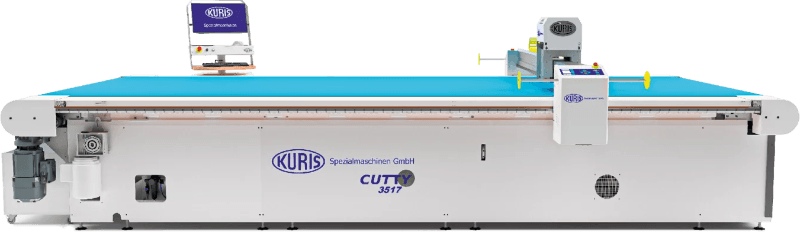
KURIS Cutty
Single-ply CNC cutting table with piece-by-piece optimisation on the hide.
See data sheet →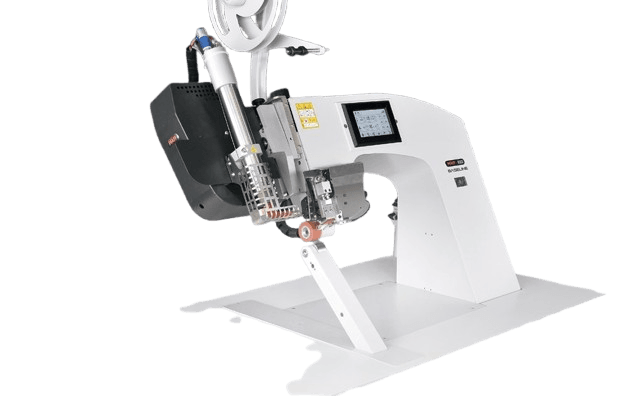
PFAFF 8303i-340/001 Baseline
Flatbed heat sealer for sealing seams with tape.
See data sheet →
PFAFF 8303ix-340/011
Post bed heat sealer for shaped pieces.
See data sheet →Frequently asked questions
Can I make a French seam with a single-needle flatbed? Yes, in two passes, but keeping it parallel depends on the operator’s hand and it shows. In series production the two-needle machine pays off.
Does a documented seam need a special machine? Yes: a workstation that monitors every stitch, the tension and the bobbin, and records every seam, such as the Dürkopp Adler 550-D800 or the PFAFF 3721 and 3745. Which modules it has depends on what your customer requires: bring us their specification.
Which needle should I use on seat leather? On leather, a cutting point; on faux leather and laminated fabric, a round point so as not to cut the backing. It’s all in the industrial needle guide.
Can you advise me without visiting you? Yes. Tell us the operation, material, thickness and covers per day, and we will show you videos of the machine working that material.
Tell us about your seat
We analyse the operation, material and production before recommending anything. Request technical advice.
Other applications: vehicle interior · airbags, seat belts, steering wheels and soft tops · all automotive machinery.
Do you have a specific seat, panel or interior piece? Send us your case with photos of the material and the seam, and we will tell you which machine fits.