
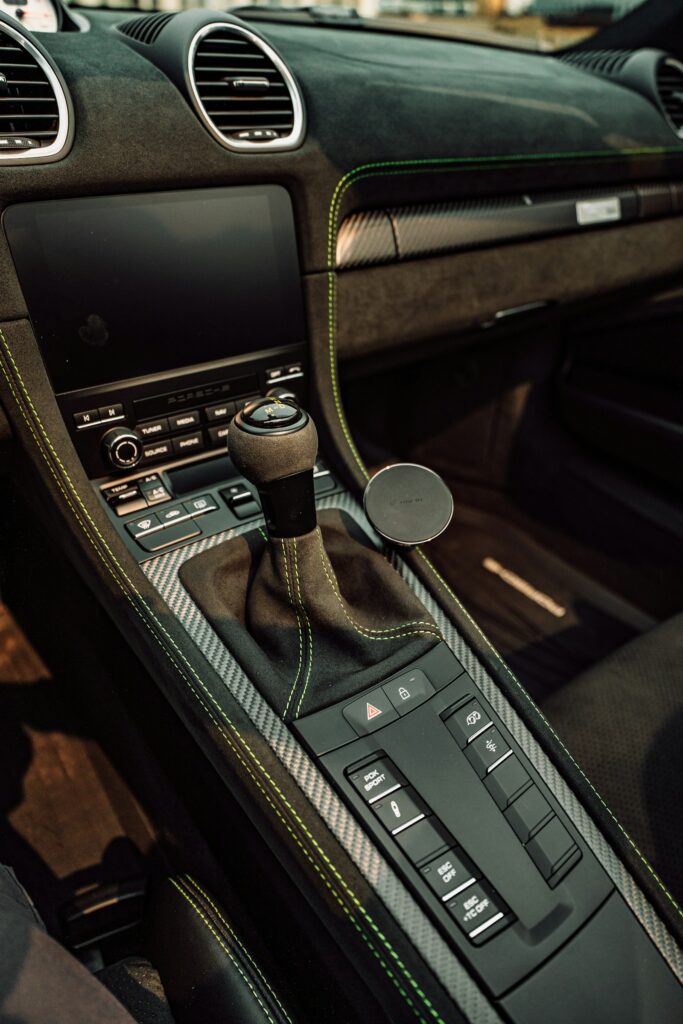
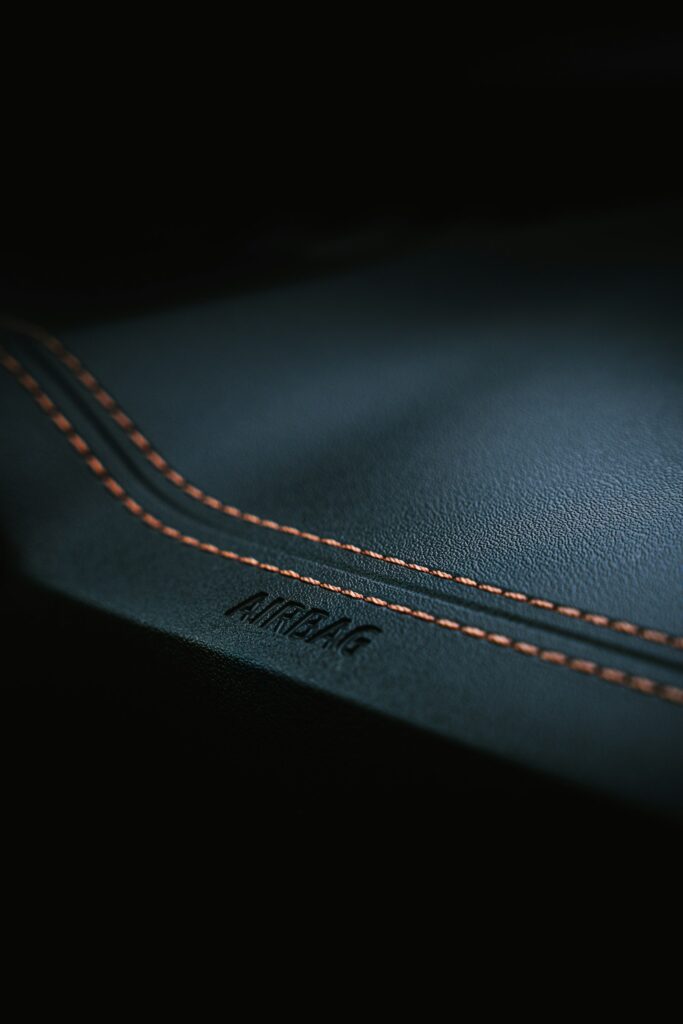
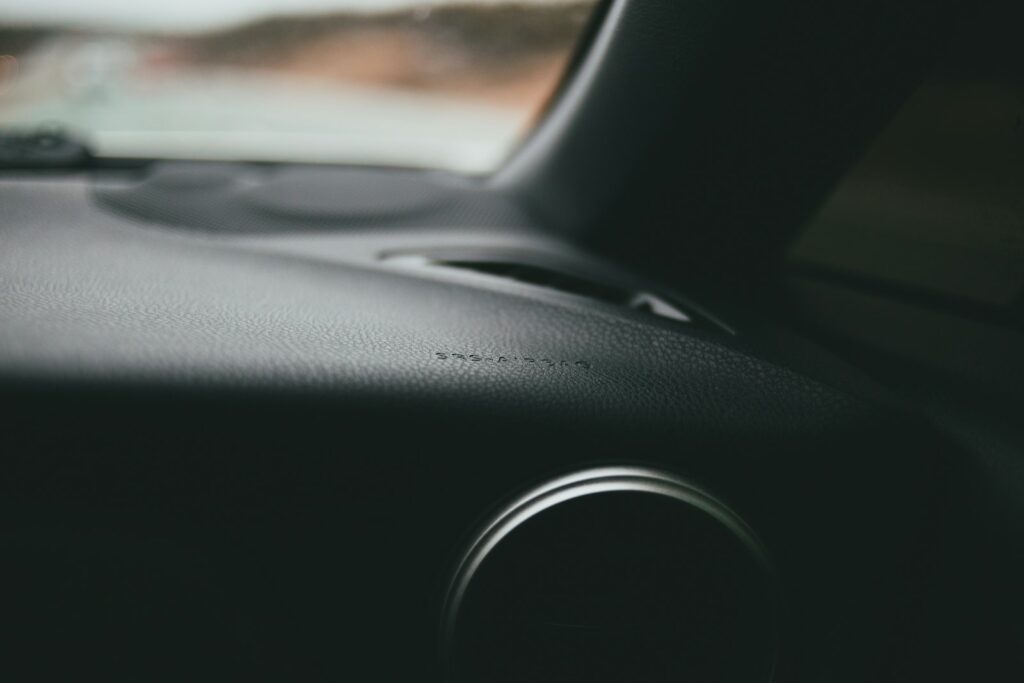
The dashboard is one of the most visible parts inside a car. When it is covered in leather or slush skin it nearly always has a decorative seam, and that is what gives it the look of a high-quality finish. That seam can be single or twin needle, and depending on which is chosen the machine and the process change.
Single-needle decorative stitching
For a single seam the usual choice is a compound feed post bed machine with lockstitch, such as the Dürkopp Adler 868 or the PFAFF 1295. The post bed leaves the part free around the sewing point, and a dashboard needs that: it is a large part with three-dimensional shapes.
Lockstitch gives a firm seam. And depending on the needle point fitted, the stitch comes out with one pattern or another, an effect that is used a lot on a visible seam.
The drawback is the bobbin. Joins are not allowed in a decorative seam: if the bobbin thread runs out halfway along, the part is scrap. On long seams you have to keep exact track of how much thread is left on the bobbin before starting each part.

Twin-needle decorative stitching
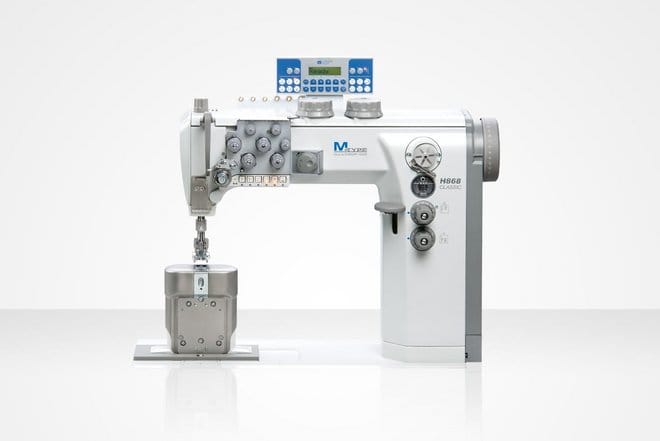
For twin stitching there are two ways to go. One is to stay with lockstitch on a two-needle machine, such as the Dürkopp Adler 868 or the PFAFF 1296. The other is a two-needle post bed chainstitch machine, such as the Pegasus TML-326.
Chainstitch has an advantage you can see straight away: both seams come out with parallel stitches. In lockstitch each needle works with its own hook, and the seam formed by the left hook looks different from the one formed by the right hook. On a part as visible as a dashboard, that difference shows.
With chainstitch there is no bobbin to change either. The lower thread is carried by the looper from a cone, so the problem of thread running out halfway along a seam disappears.

After sewing: tape over the seam with the PFAFF 8303ix
Whether single or twin needle, lockstitch or chainstitch, the next step is to apply a tape over the seams. This is done with a PFAFF 8303ix set up for cold bonding of tesa or 3M adhesive tapes.
The tape does two things. When the part is later fitted on the dashboard, the glue does not come out through the stitch holes. And on chainstitch seams it holds the stitch, so it can no longer unravel.

We advise you before you choose the machine
Every dashboard manufacturer works with its own material, seam length and part volume. At Maquinorya we help you decide between one needle or two, lockstitch or chainstitch, and which machine you need to apply the tape. You do not have to buy from us to ask for advice: we look at your part and tell you which machine makes sense on price, production, functionality and maintenance cost. Achim Bernhardt Becker has been in the trade since 1982.
Write to us through contact or on WhatsApp at 659 73 09 68. You will find more machines for this sector in machinery for car interiors.
Frequently asked questions
Which machine is used for decorative stitching on a dashboard?
A compound feed post bed machine. For one needle, lockstitch, such as the Dürkopp Adler 868 or the PFAFF 1295. For two needles, lockstitch (Dürkopp Adler 868 or PFAFF 1296) or chainstitch, such as the Pegasus TML-326.
Lockstitch or chainstitch for twin stitching?
Chainstitch leaves both seams with parallel stitches and has no bobbin. Lockstitch gives a firm seam and allows effects with the needle point, but the seam from the left hook looks different from the one from the right hook.
Why is tape applied over the seam?
So that when the part is fitted on the dashboard the glue does not come out through the stitch holes, and to secure the chainstitch. It is cold bonded with a PFAFF 8303ix and tesa or 3M tape.